The Super Tucano and Portugal: Why It Makes More Sense Than It Seems
Since the announcement of the Super Tucano acquisition to join the ranks of the Portuguese Air Force, through to the arrival of the first units, the reception has been one of mixed feelings. On one side, the sceptics - “a propeller aircraft in the age of stealth jets” - on the other, those who looked at this acquisition with the potential it genuinely holds. The truth is, when you analyse the aircraft with rigour and without bias, the decision proves not only correct, but strategically sound.
This acquisition does not emerge from a vacuum. The progressive obsolescence of Portuguese military assets demands gradual replacement, and the evolution of global threats: terrorism, drug trafficking, piracy, regional conflicts - requires that the Armed Forces are equipped to respond. Portugal is a member of NATO, the EU, the UN and the CPLP, with defence obligations across all those frameworks. Its geographical position, a connector between Europe, Africa and the Americas, makes that responsibility even more concrete. The 12 A-29N Super Tucanos are not an expense. They are an answer.
Let’s get to what matters.
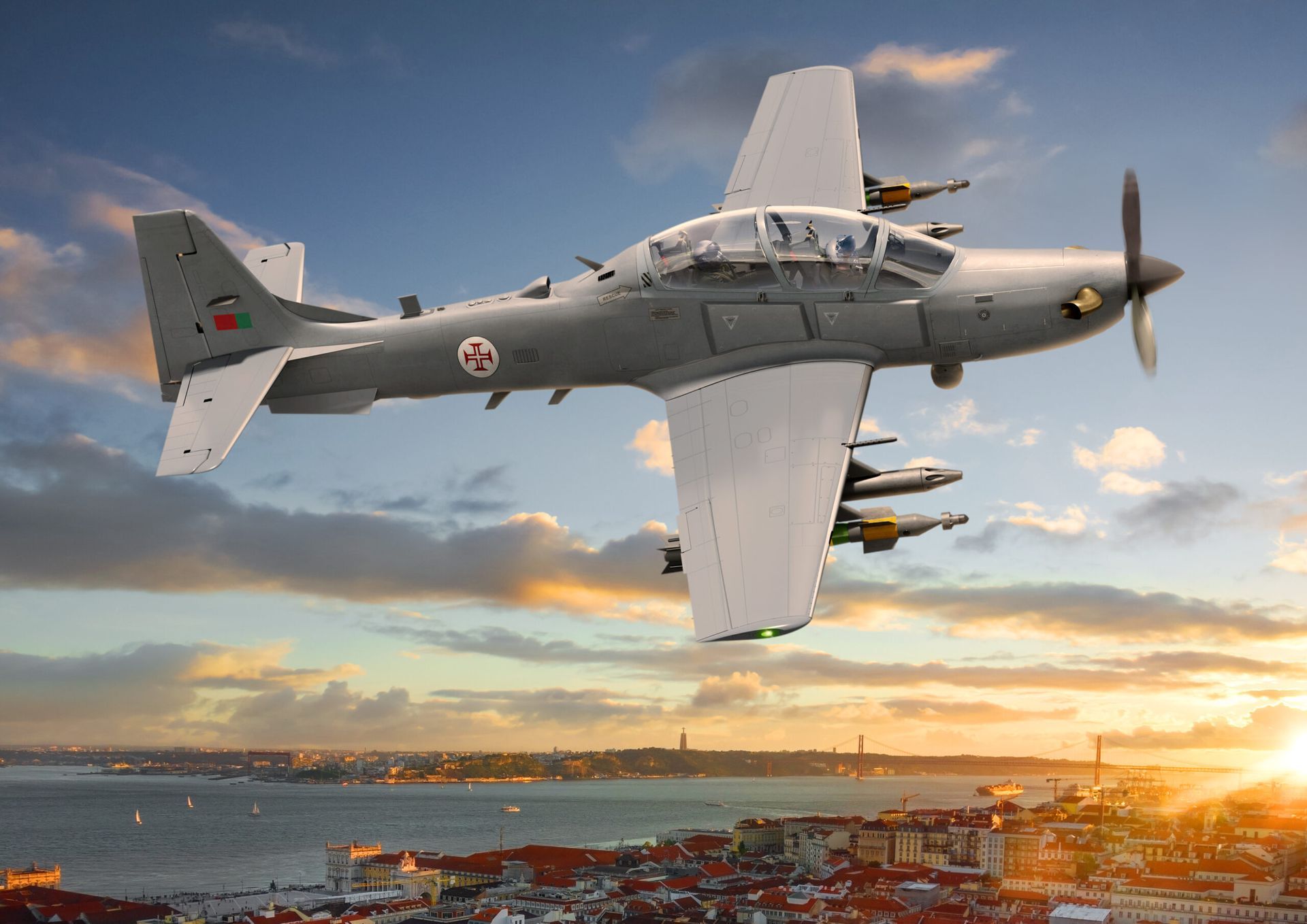
The A-29N in Portuguese Air Force colours - the NATO-standard variant that put Portugal on the map as the Alliance's first operator of the type. | Credit: Embraer
A Platform That Speaks for Itself
We are talking about a twin-seat turboprop aircraft with a maximum speed of 590 km/h, a range of 1,500 km, and a weapons payload capacity of 1,550 kg - all of this at a low acquisition cost and, equally, a low cost per flight hour. Two factors that, in a defence budget context always under pressure, are impossible to ignore.
But there’s more: Portugal became the first NATO country to operate this system, which led Embraer to develop the A-29N variant, specifically designed to meet Alliance standards. This not only strengthens the ties between Portugal and Brazil, but cements Portugal in the role of launch customer, serving as a reference and example for other allies. This was not an isolated case: the same phenomenon occurred with the KC-390 Millennium, also from Embraer, where Portugal once again led the way.
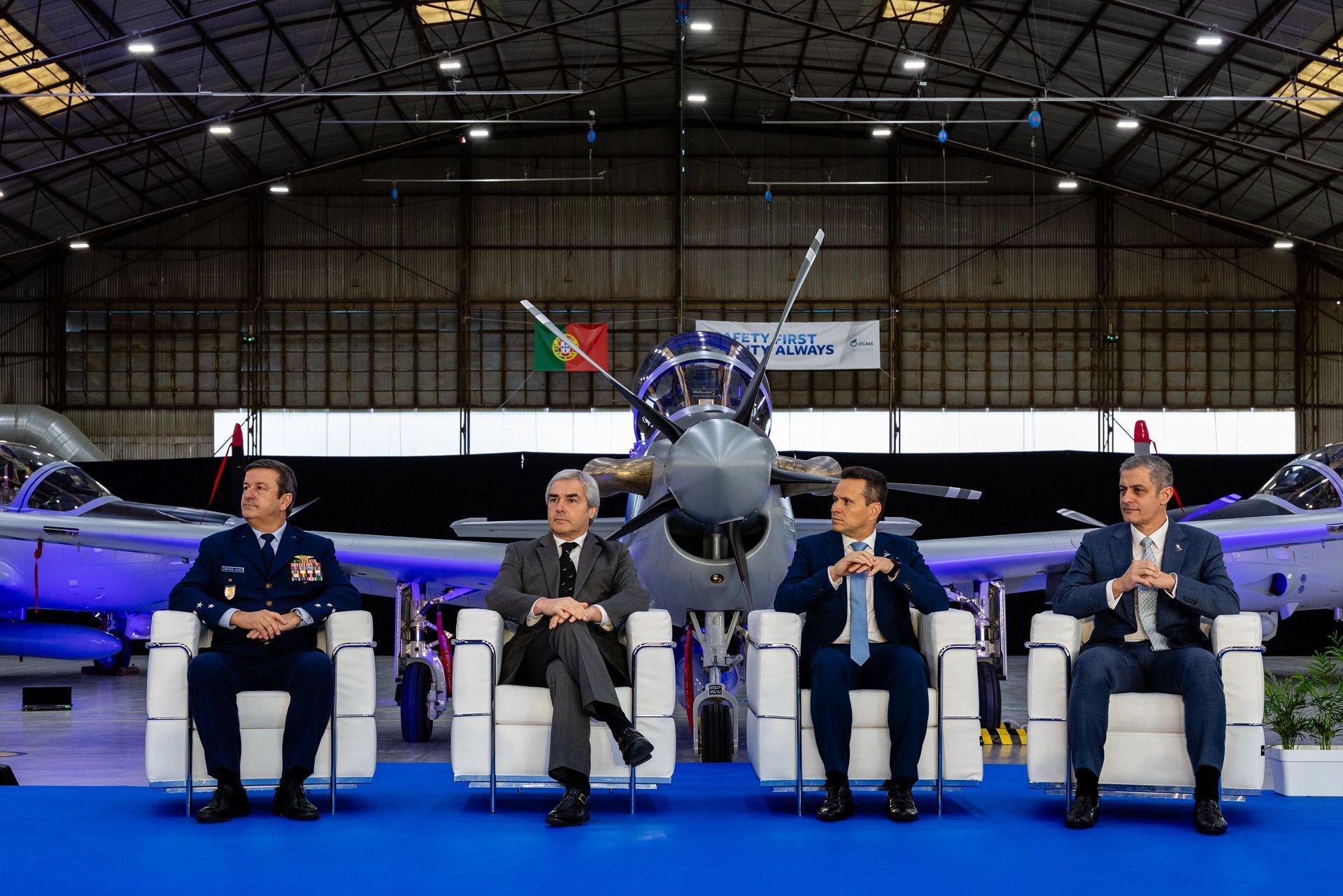
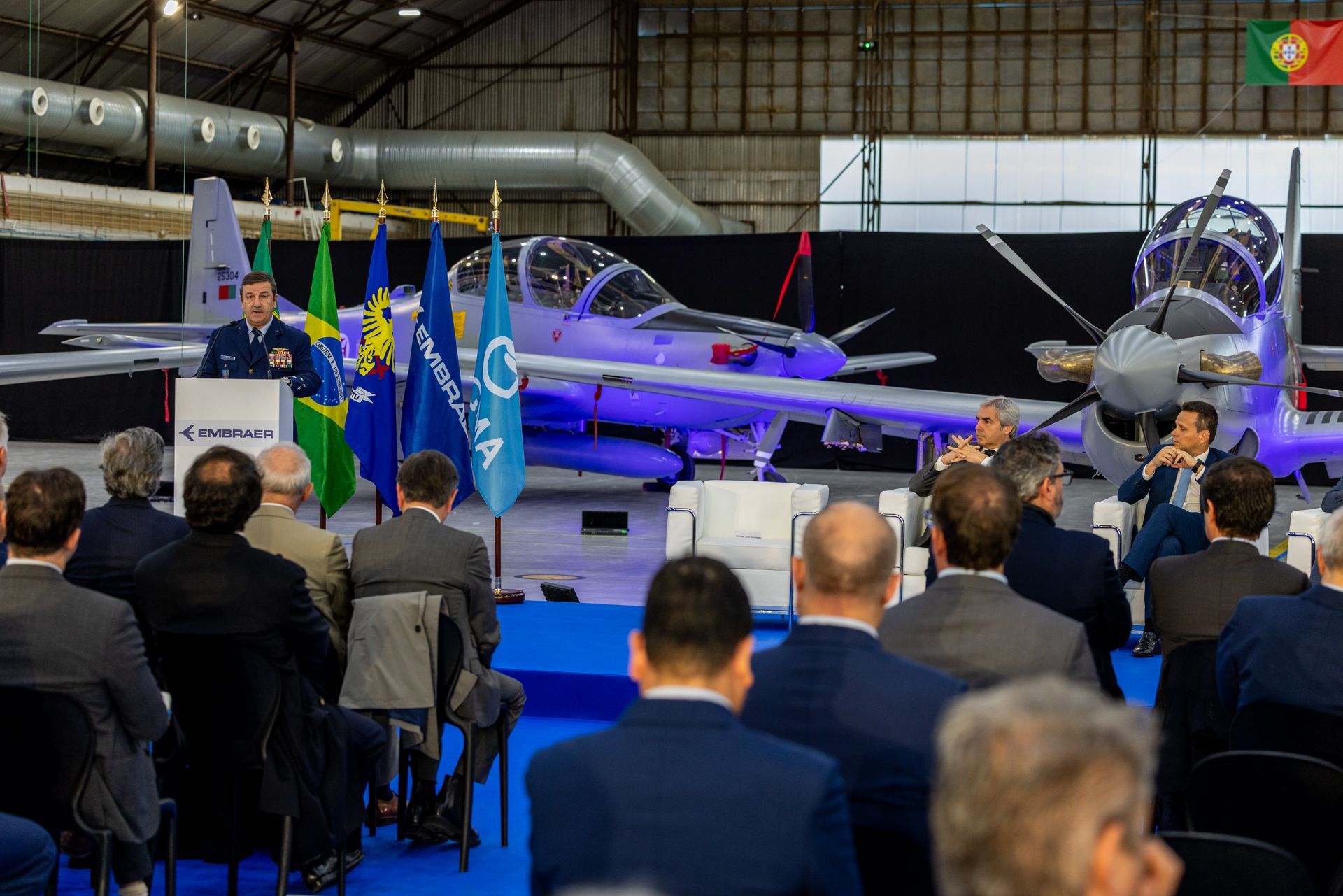
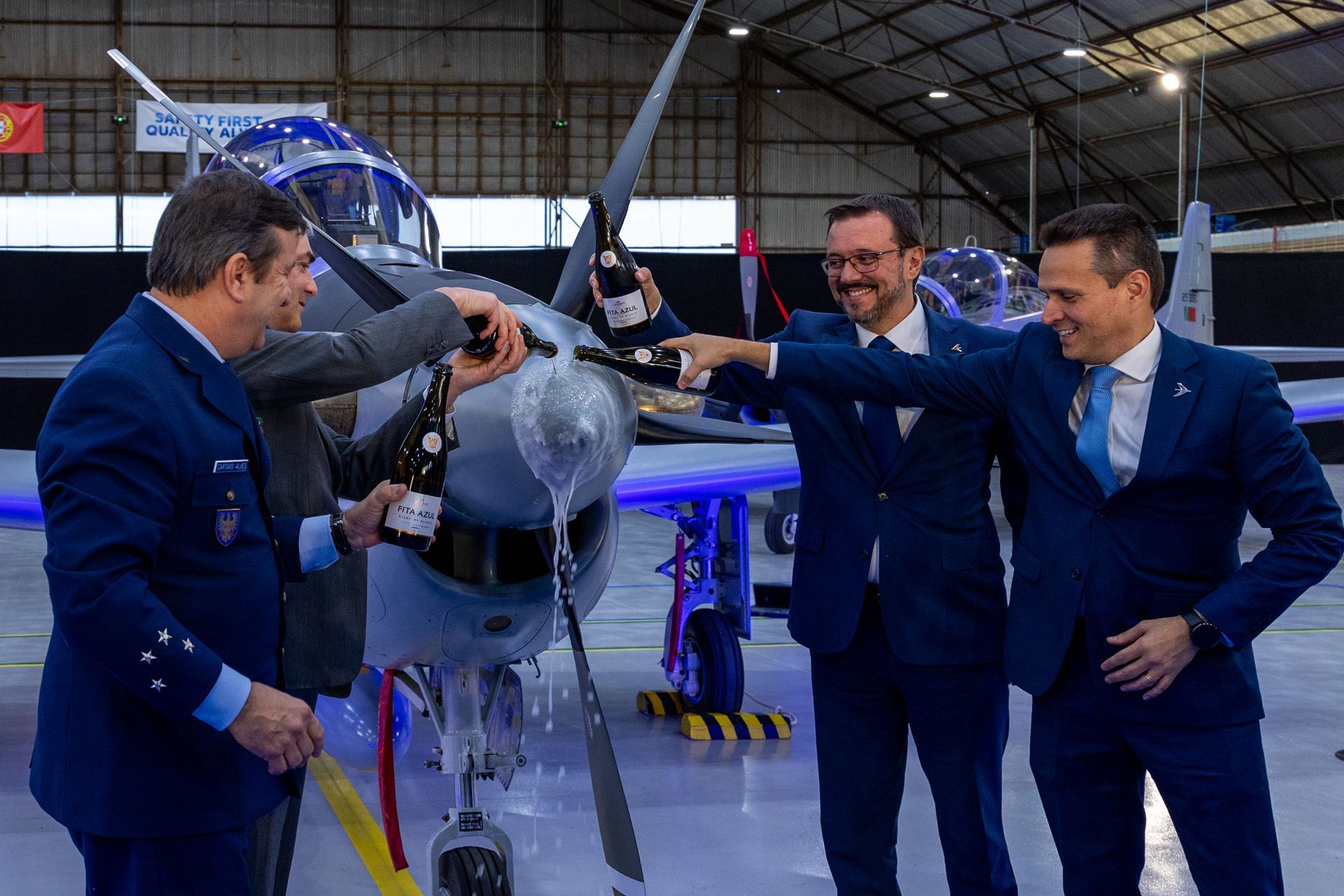
The first A-29N units officially handed over to the Portuguese Air Force on December 17, 2025, at OGMA facilities — a milestone that made Portugal the first NATO nation to operate the type. | Credit: Portuguese Air Force
What the A-29N Actually Brings to the Table
The A-29N is not simply a Super Tucano with a NATO sticker slapped on the fuselage. When Embraer unveiled it at the LAAD Defence & Security exhibition in April 2023, it was a deliberate signal to European air forces: this variant was purpose-built for the Alliance. The differences from previous variants are substantial, and they carry concrete operational implications.
On the communications and navigation side, the A-29N carries NATO-standard V/UHF radios, a satellite communications terminal, and Link 16 datalink - the same tactical data network that ties together NATO air operations across the Alliance. It also integrates a Digitally Aided Close Air Support module, known as DACAS, which allows ground forces to transmit targeting data to the aircraft digitally rather than over voice radio, reducing the risk of error in the most critical moments of a mission. Add to that a Variable Message Format (VMF) system, encrypted military GPS, and a Mod 5 IFF transponder — the identification system that prevents friendly fire in a congested airspace — and what emerges is an aircraft genuinely interoperable with any NATO partner in the sky.
Perhaps the most tactically relevant addition is ROVER (Remotely Operated Video Enhanced Receiver) compatibility. This capability allows the aircraft’s electro-optical sensor feed to be streamed in real time directly to ground forces. A special operations team on the ground can watch exactly what the aircraft is seeing, on the same screen, at the same time. In a complex urban or jungle environment, that shared situational awareness can be the difference between a successful mission and a catastrophic mistake.
The aircraft also supports single-pilot operation, which has practical implications for both operational flexibility and training costs. And the embedded training suite, updated to include virtual, augmented and mixed reality, means it arrives not just as a weapons platform, but as a complete tactical training system.
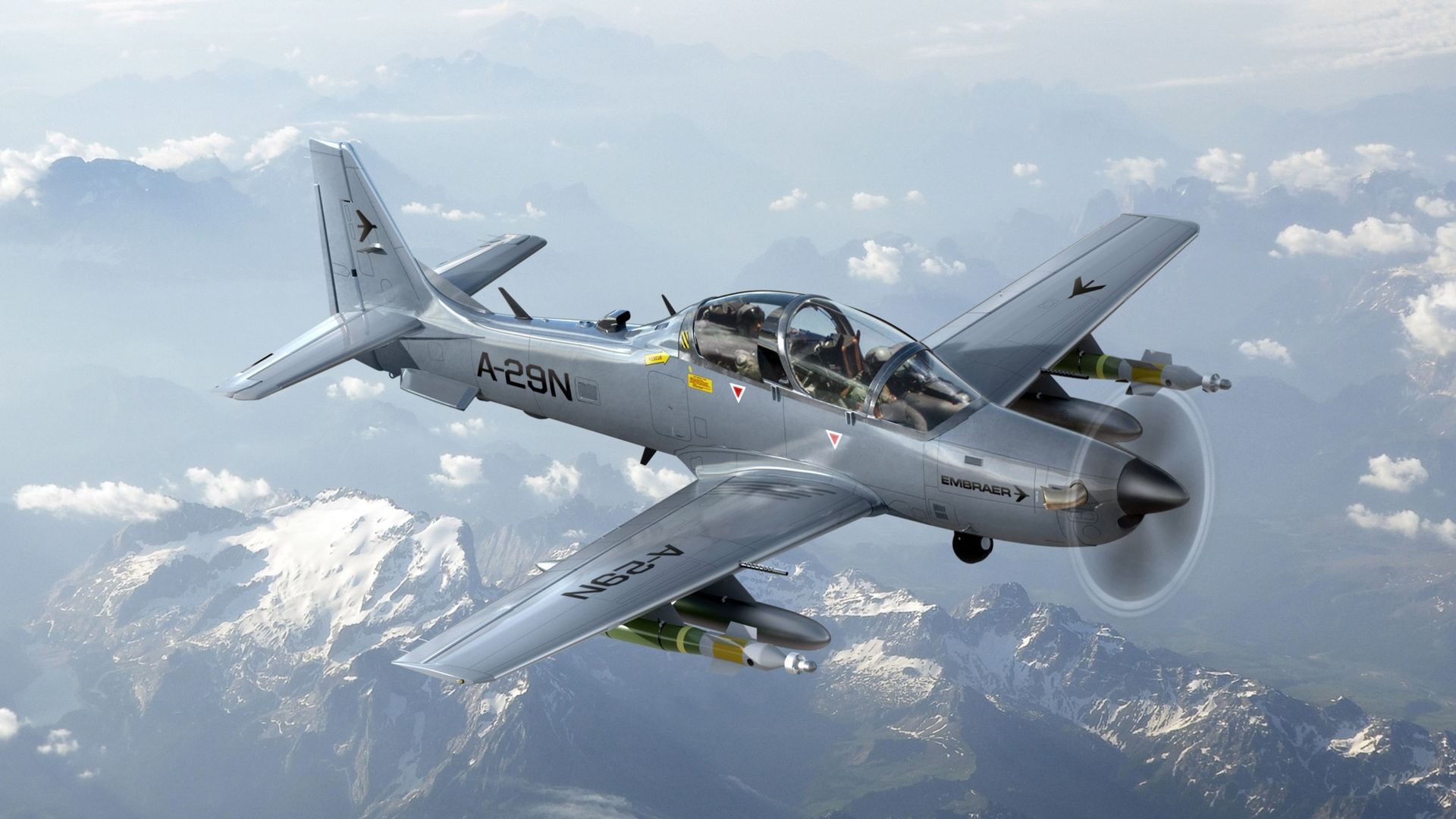
The A-29N in its element - armed, airborne, and built from the ground up to meet NATO standards. The designation on the fuselage says it all. | Credit: Embraer
Advanced Training: A Long-Overdue Gap to Fill
One of the most immediate vectors, and perhaps the most uncontroversial, is advanced training. Since Portugal retired and decommissioned the Alpha-Jet from operational service, a significant gap has emerged in the training pipeline for pilots seeking to continue their careers in fighter squadrons, at the controls of the F-16. The Super Tucano bridges that gap, easing the transition between aircraft such as the Chipmunk and TB-30, and reaction fighters.
It is equipped with similar, in some cases shared, systems, can be used in ground attack and dogfight training scenarios, and is already capable of replicating the environment and G-forces that fighter pilots will eventually have to manage. Its systems architecture brings it close to real combat conditions, preparing pilots more effectively for a smooth transition not only to the F-16M, but potentially to next generation aircraft such as the F-35 (or another option available on the market). It is not a replacement for the F-16. It is the missing step to get there — and, eventually, to go even further.
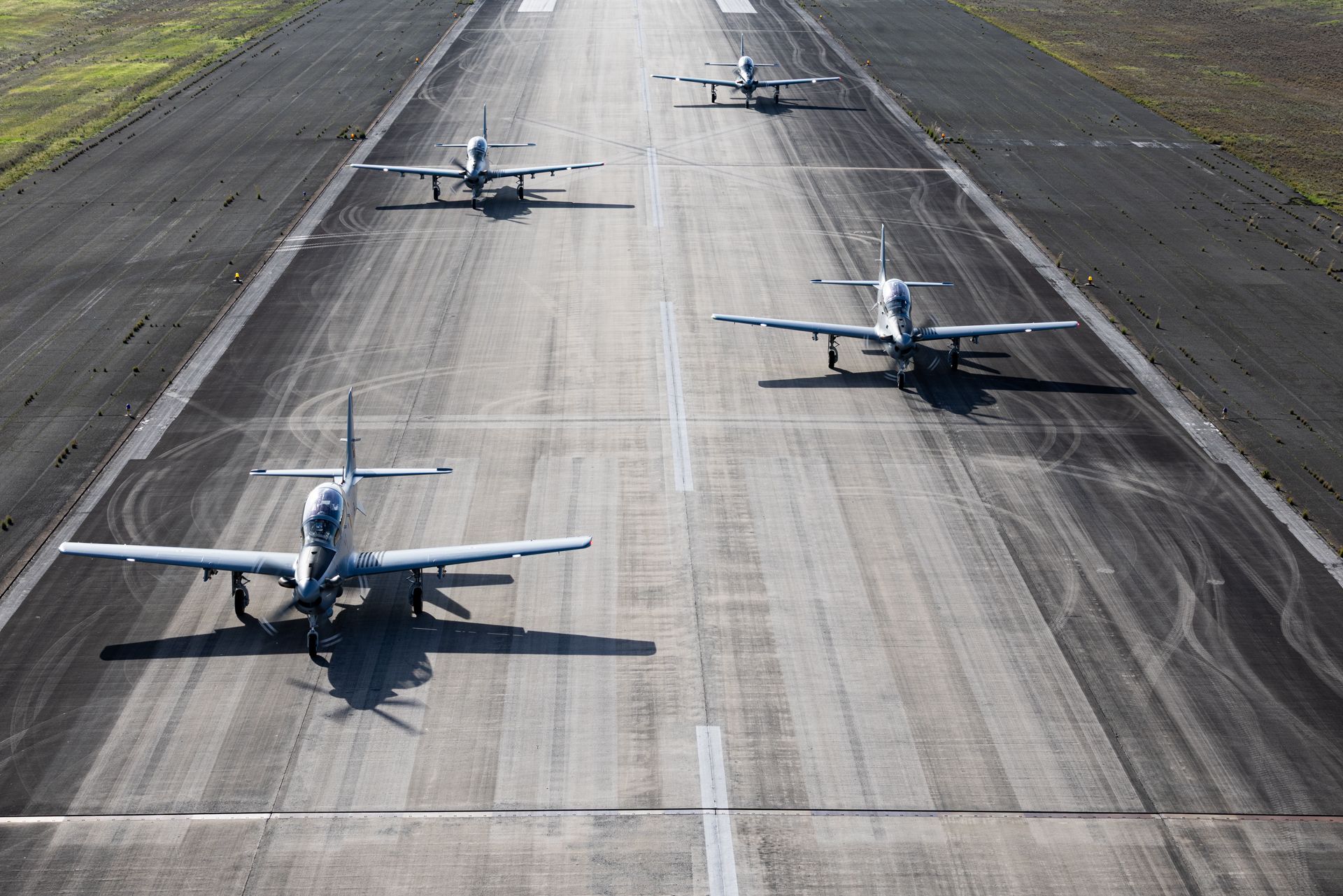
The morning after the handover ceremony, the A-29N Super Tucanos touched down at Air Base No. 11 - home of Squadron 101 "Roncos" - where the propellers had barely stopped before a new chapter in Portuguese Air Force history began. | Credit: Portuguese Air Force
Combat: More Versatile Than It Looks
This is where the argument gains a dimension that many overlook. The low cost per flight hour allows the Super Tucano to be deployed in operations where the anti-aircraft threat is limited or absent, and such theatres are far from rare in today’s world.
Consider the United States: the Air Force Special Operations Command (AFSOC), which forms the air component of USSOCOM, invested in aircraft such as the OA-1K Skyraider II, a heavily militarised version of a basic agricultural aircraft, the AT-802, specifically for Close Air Support (CAS) missions in low-threat environments, supporting special operations forces. Simultaneously, through ISR (Intelligence, Surveillance and Reconnaissance) systems, the aircraft monitors the area of operations, ensuring there are no unpleasant surprises for personnel on the ground. The A-29 Super Tucano can do exactly that.
Being realistic: Portugal does not operate at the tempo of American Special Forces. But it is part of an alliance, with real force projection commitments. At any moment it may need to deploy assets, air or otherwise, to a joint operation. It is always useful to have these cards available.
There is, however, a more immediate and concrete reality. Since 2017, Portugal has had troops deployed in the Central African Republic as part of MINUSCA, the United Nations Multidimensional Integrated Stabilization Mission in the CAR. Those troops operate with limited air support assets, such as helicopter detachments from other nations. Having a handful of Super Tucanos in that theatre would be, at minimum, a dual-effect factor: on one hand, a psychological guarantee for personnel on the ground, they know something is there to protect them; on the other, a significant deterrent for anyone considering provocations. The presence of modern aircraft in peace missions is also, in itself, a clear signal of the country’s commitment to global security, reinforcing Portugal’s strategic partnerships.
It also bears noting that this is a guerrilla warfare environment, with dense jungle and forest terrain interspersed with open areas, a scenario not entirely unlike what Portugal faced during the Overseas War, where aircraft such as the T-6 were widely used as CAS platforms for troops on the ground. The Super Tucano has an additional trump card in this context: the ability to operate from temporary, unpaved strips. A versatility no reaction fighter can offer.
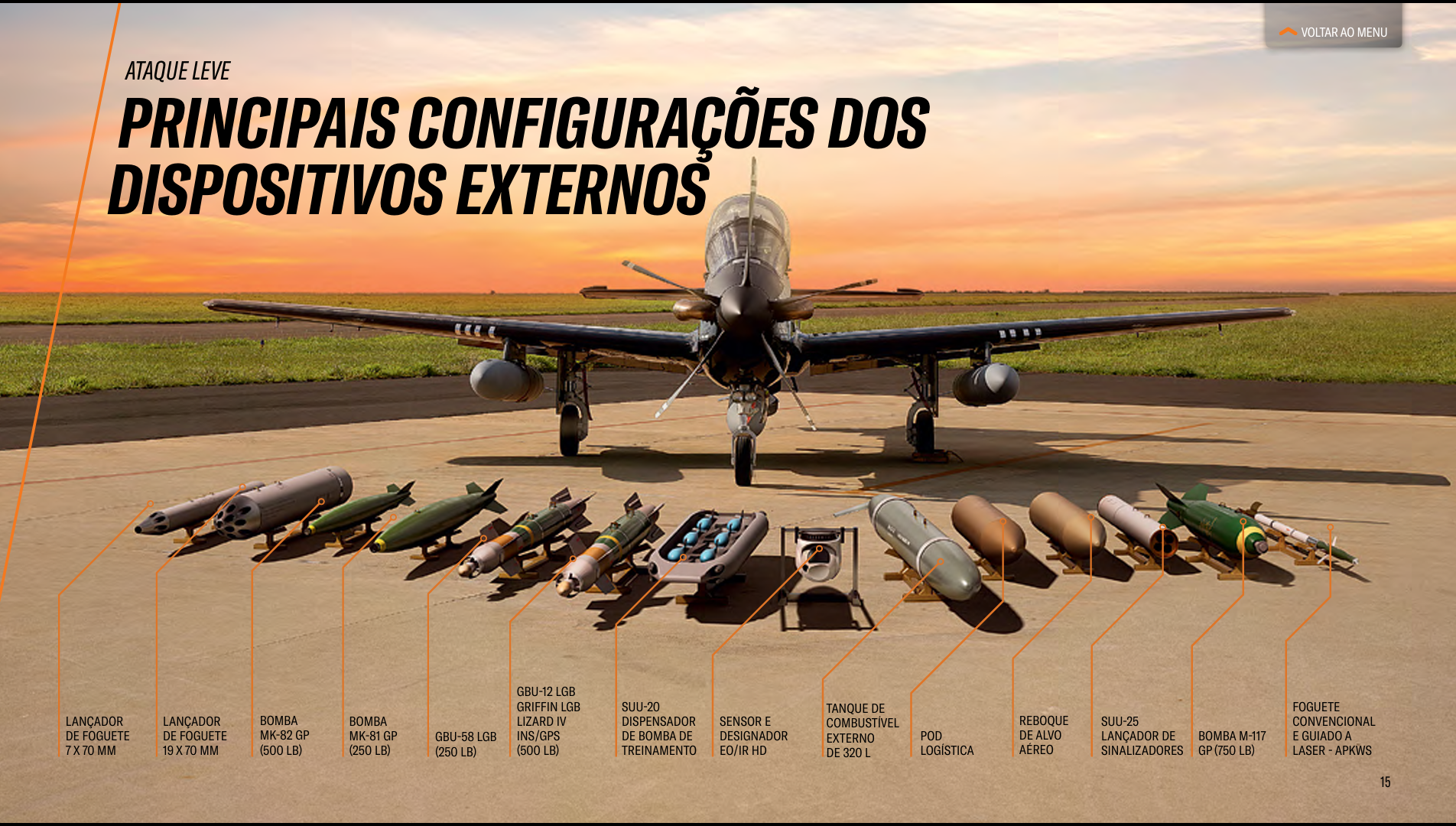
A glimpse of what the A-29N brings to the table — from laser-guided bombs and rocket pods to EO/IR targeting systems, the Super Tucano's arsenal offers over 160 possible configurations. | Credit: Embraer Official Brochure
The New Paradigm: Drones, and the Need to Stop Them
It would be impossible to write about this topic in 2026 without addressing the elephant in the room: drones. The conflict in Ukraine was not just a laboratory of land warfare - it was the largest public demonstration ever seen of what a drone threat at scale can do to conventional military forces. And Europe is watching, uncomfortably, with the growing awareness that it is not prepared to respond.
The problem is not new, but the scale is. Drones have moved from being a tactical curiosity of asymmetric forces to becoming a structural threat to sovereign airspace. In 2024, incursions by unidentified drones were recorded over military bases in several European NATO countries, including Germany, the United Kingdom and Sweden. In some cases, the armed forces concerned had no immediate means to respond without disproportionate escalation. Scrambling an F-16 to shoot down a €500 drone is, quite literally, bad economics.
Drone interception requires multiple layers: man-portable systems, high-power microwave weapons, lasers, kinetic projectiles, jamming systems, MANPADs, vehicle-mounted launchers. But the airborne layer exists and has been used. What has been observed in Ukrainian skies is telling: from the use of fighters for interceptions, to more cost-efficient solutions such as the Yak-52, a basic training aircraft that first flew in 1976, and the AN-28, a STOL utility aircraft with a first flight in 1973, now equipped with ISR systems and armament such as the Dillon Aero M-134D Gatling. These are improvised solutions, born of necessity. They work, but have obvious limitations in terms of detection systems, range and response capability.
This is where the Super Tucano stands apart. Unlike those improvised platforms, the A-29N arrives with integrated targeting systems, latest-generation EO/IR sensors, precision armament and a full self-protection suite. Its ability to operate at low altitude and reduced speed. characteristics that a fighter jet manages with difficulty. makes it particularly suited to hunting low and medium altitude drones, which is precisely where the threat is most prevalent. A laser-guided rocket pod, combined with the internal 12.7mm machine guns, represents an effective and proportionate kinetic response to most drone threats in the current spectrum.
Embraer is already working on a dedicated counter-UAS upgrade for the platform, making this capability even more structured and effective. But even without that upgrade, the A-29N already represents a smarter, cheaper and more sustainable response than scrambling a 4th-generation fighter for every drone incursion over national or allied territory. In a NATO context where pressure to increase low-altitude air defence capabilities is growing - and where budgets, however much they increase, never quite cover everything - having a platform like this in the fleet is not redundancy. It is rationality.
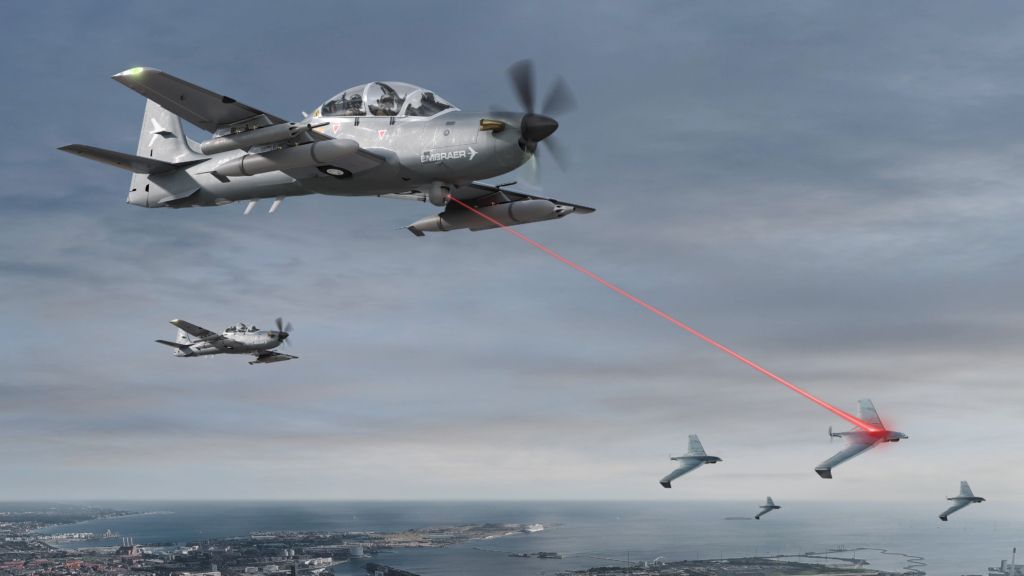
Embraer's counter-UAS upgrade for the A-29 Super Tucano - turning an already versatile platform into a cost-effective answer to one of the most pressing threats on the modern battlefield. Credit: Embraer
The EEZ: One of the World’s Largest, and Not Always Well Guarded
There is a figure that rarely features in discussions about Portuguese national defence, and it should: Portugal’s Exclusive Economic Zone is the 20th largest in the world and the 5th in Europe, covering approximately 1.7 million square kilometres. To put that in context, it is almost 19 times the country’s land area. It encompasses the Atlantic around the mainland, the Azores and Madeira, and contains natural resources, strategic maritime routes, submarine communications cables, and vessel traffic that ranges from the entirely legitimate to the deeply illicit.
Patrolling an area of this size with available assets is, to be frank, a challenge that systematically exceeds installed capacity. The P-3C Cup+, in service with Esquadra 601 - “Lobos”, remains the backbone of this mission: equipped with the necessary sensors, offering greater endurance and range, built for long-duration patrols over the Atlantic. But the operational reality is demanding. The shortage of specialised human assets - pilots, tactical systems operators, complete crews - is a structural limitation that no aircraft acquisition resolves on its own. A fleet can grow in numbers; the human capacity to operate it sustainably is another matter entirely, built over years and not through contracts. The P-3C was conceived in the 1960s. However much the Cup+ upgrades have modernised it, there is a limit to what an aircraft of this generation can do in a world of rapidly evolving threats.
It is in this context that the Super Tucano emerges as a genuinely useful complement, not merely a second-line fallback. For coastal patrol, the band between the shoreline and the first few hundred nautical miles, the A-29N offers something the P-3C cannot: speed of response, low operating cost, and the capacity for immediate intervention if required. A P-3C on a long-duration patrol mission in the mid-Atlantic cannot be redirected in minutes to respond to a situation off the Alentejo coast or at the Cape St. Vincent channel. An A-29N based in Beja can.
The threats in this space are real and documented. Portugal sits on one of the Atlantic’s most active drug trafficking routes, with vessels regularly transiting between South America and Western Europe. Illegal fishing in the EEZ, including by industrial fleets operating in the grey zones of international regulation, represents significant economic losses and a silent erosion of sovereignty. And there is a broader maritime security dimension: the submarine cables that pass through Portugal’s EEZ are critical infrastructure for transatlantic communications. Their vulnerability, demonstrated by recent incidents in the Baltic Sea, is not theoretical.
In this framework, the A-29Ns can support operations by the Navy, the Maritime Authority and various law enforcement agencies, contributing to the monitoring and effective exercise of state authority at sea. In VBSS (Visit, Board, Search, and Seizure) operations and counter-piracy missions, they fly in a holding pattern while teams conduct the approach, maintaining active surveillance of the area of operations. If necessary, they deter. If required, they strike. And they do so at a cost per flight hour that allows this presence to be maintained sustainably, not only on the days when the budget allows for scrambling heavier assets.
Portugal’s EEZ is a strategic asset that Portugal has systematically undervalued in terms of defence and monitoring capacity. The A-29N does not solve that problem alone - no platform does. But it is a missing piece in a puzzle that is, finally, beginning to take shape.
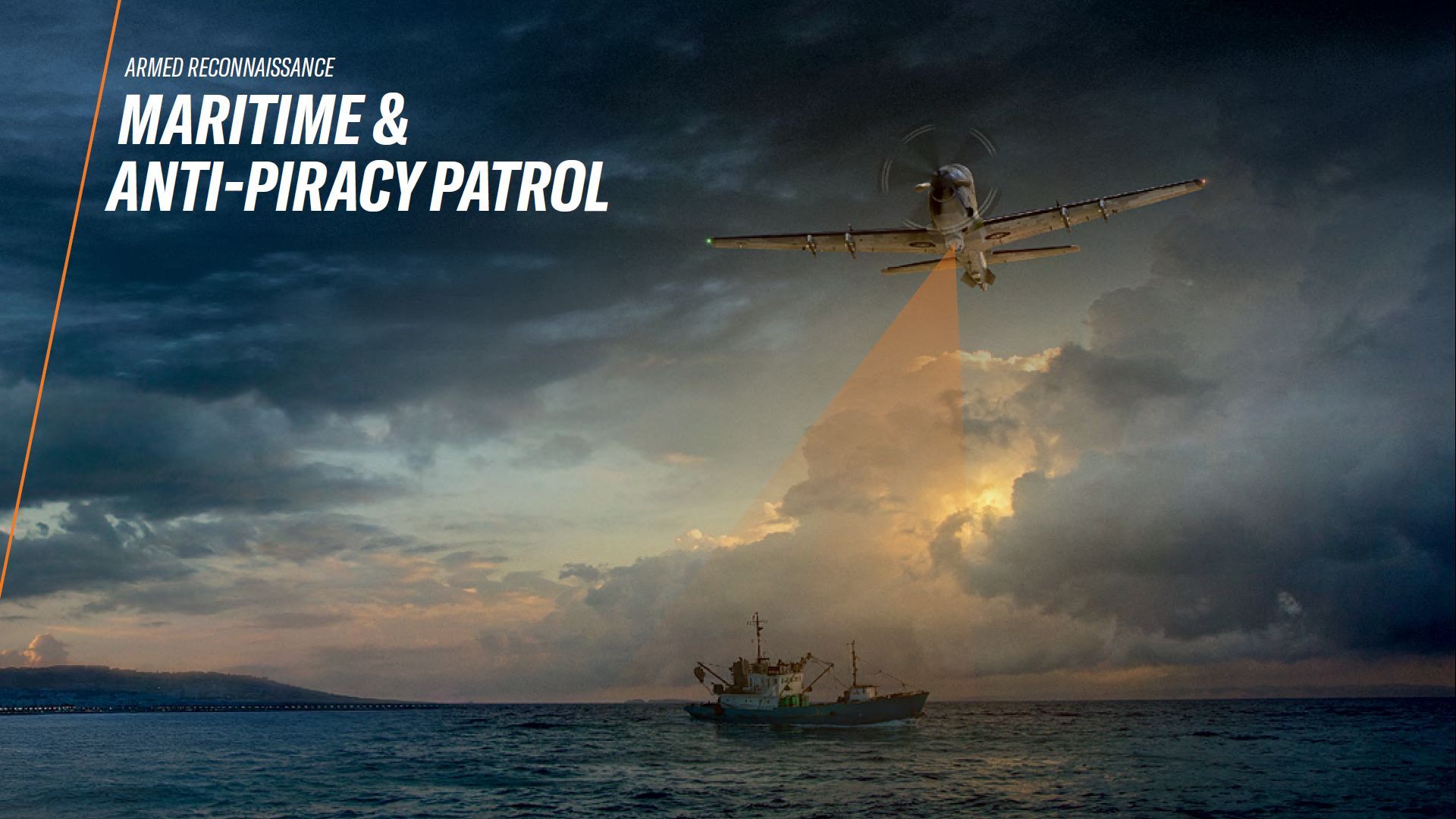
The A-29N is no stranger to the sea. Its ISR capabilities and loitering endurance make it a natural fit for maritime patrol, anti-piracy operations, and VBSS support - quietly watching, ready to act. | Credit: Embraer Official Brochure
The Portugal-Embraer Pattern: This Has Happened Before
There is a strategic logic at work here that goes beyond a single procurement decision, and it becomes clear when you look at what happened with the KC-390 Millennium.
Portugal was the first NATO member to operate the KC-390 - a decision that, at the time, also raised eyebrows in some quarters. The result? Air Base No. 11 in Beja became an internationally recognised training centre for the aircraft. Portugal positioned itself as Embraer’s strategic partner for European expansion, with the contract eventually including an option for up to ten additional aircraft to be acquired by partner nations through Portugal, via government-to-government negotiations. The pattern is unambiguous: Portugal buys first, Portugal trains the Alliance.
The A-29N follows the same script. The contract signed in December 2024, valued at approximately 200 million euros, covers 12 aircraft, a flight simulator, logistics support, and critically, national industry participation in the reconfiguration of the aircraft to NATO standards. The acquisition is aligned with NATO and EU standards, strengthening the interoperability of Portuguese forces in allied missions - a crucial aspect in ensuring that Portugal remains a militarily valid and trusted partner.
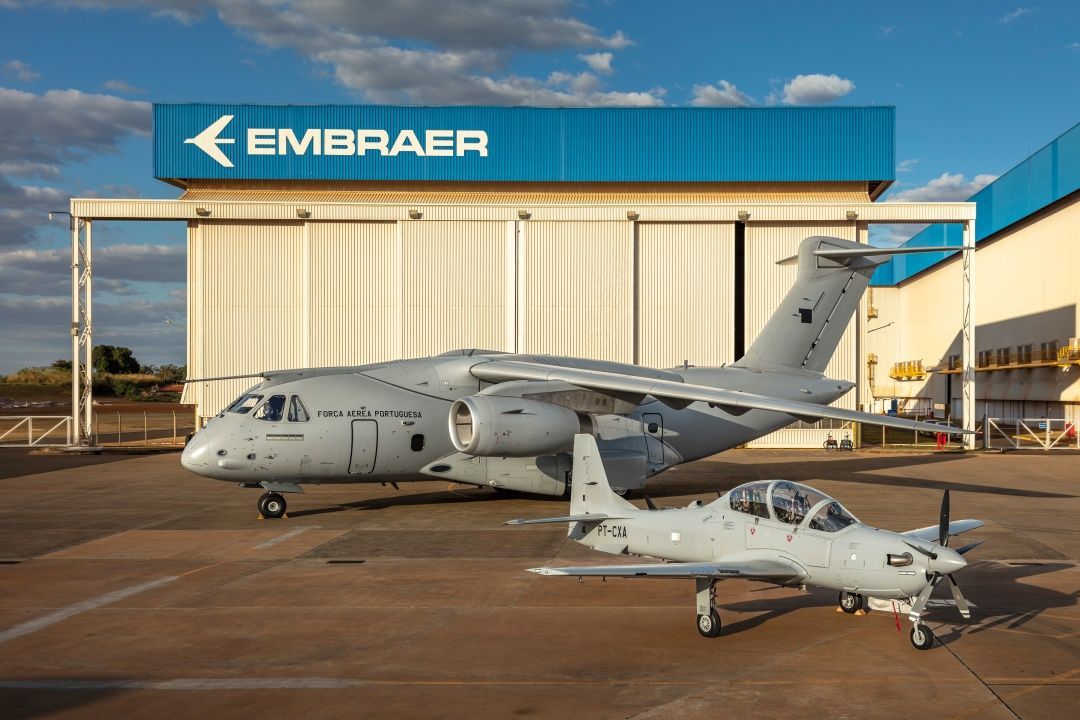
Two aircraft, one partnership. The KC-390 Millennium and the A-29N side by side at Embraer's facility in Brazil - a photograph that captures Portugal's strategic relationship with Embraer better than any press release could. Credit: Embraer
Portugal as Europe’s A-29N Industrial Hub
The industrial dimension of this acquisition deserves to be treated separately, because it is where the story becomes genuinely interesting from an economic and strategic standpoint.
The OGMA - Indústria Aeronáutica de Portugal, majority-owned by Embraer and based in Alverca, is already the first and only company in the entire EMEA region certified for A-29 Super Tucano maintenance and modification. That process began in 2022, when Embraer started capacitating OGMA not just for routine maintenance, but for future modifications to meet evolving customer requirements across Europe, the Middle East and Africa. The aircraft used for international demonstration tours, the very unit that appeared at Beja Air Show 2024, was already based at OGMA, with Portuguese technicians supporting its global sales campaign.
For the A-29N specifically, OGMA is responsible for integrating the NATO-standard systems into each aircraft before delivery to the Portuguese Air Force. The knowledge accumulated through that process positions Portugal, and OGMA, as the natural hub for any future A-29N operators in Europe who need maintenance, upgrade or modification work done.
This acquisition is also part of the national strategy of using Armed Forces re-equipment programmes to support the country’s industrial development and strengthen the Defence Technology and Industrial Base. That is guaranteed through active participation in the creation of technical solutions for the aircraft’s new operational systems architecture — it is not just buying and receiving, it is building knowledge that stays in Portugal.
And then there is Beja. In December 2025, alongside the handover of the first aircraft, a letter of intent was signed for the installation of a final assembly line for the A-29N in Beja. The aircraft produced there will be available to other European nations through government-to-government negotiations, with Portugal acting as intermediary and beneficiary. It is the KC-390 model, applied again, this time with counter-UAS capability at its core. Embraer has been explicit: there is growing demand across Europe for aircraft capable of drone interception missions, and a production line in Portugal is the platform from which to serve that demand.
The numbers speak for themselves. Embraer has invested 74 million euros in OGMA, generating 300 jobs and projecting a potential tripling of OGMA’s annual turnover to 600 million euros. Portugal is not just buying an aircraft. It is building an ecosystem.
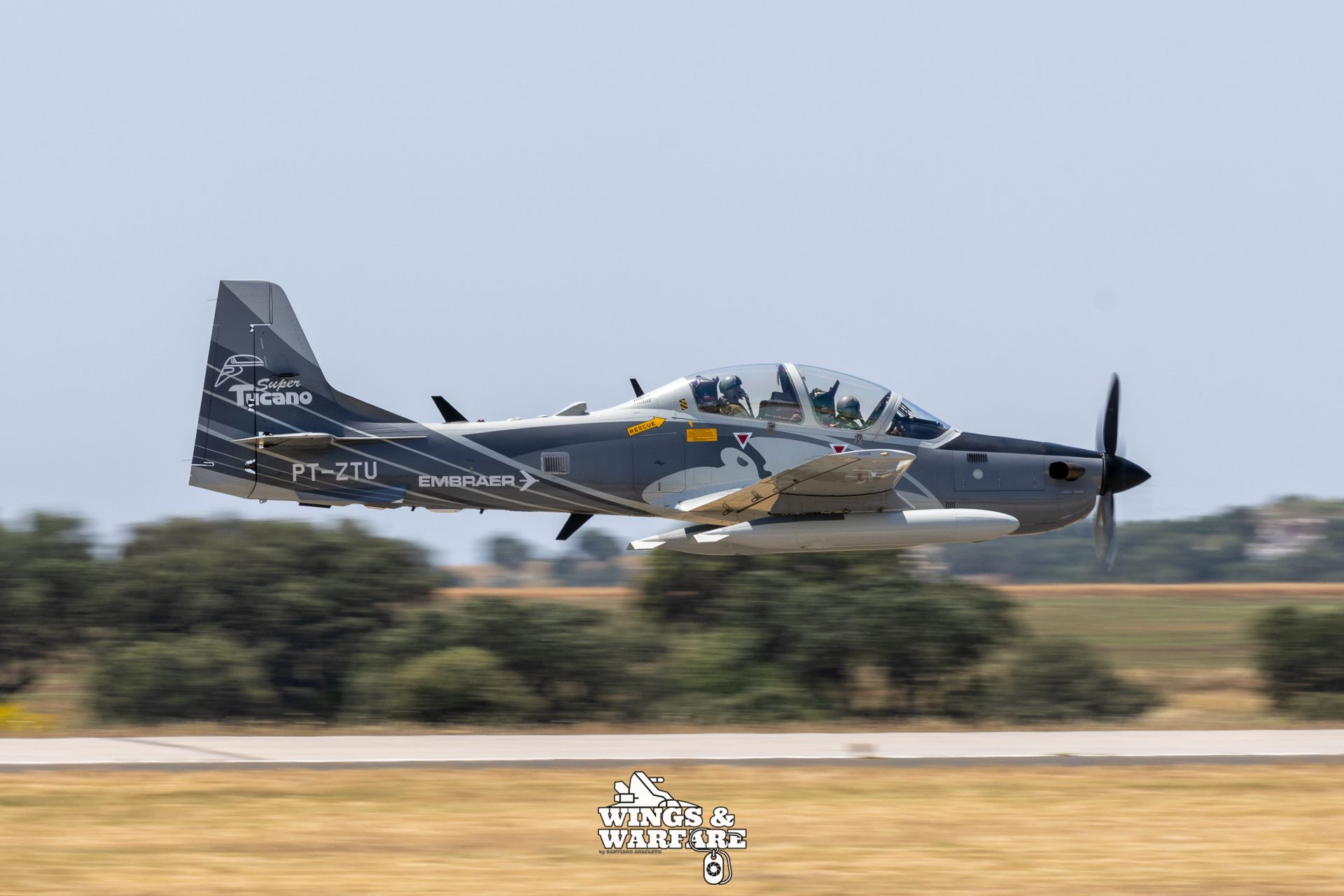
PT-ZTU on a low pass at Beja Air Show 2024 - the demonstration that started it all. | Credit: Wings & Warfare
Conclusion: This Is Not Nostalgia. It Is Strategy.
Looking at things as they are, the acquisition of the Super Tucano for Portugal is, beyond a strategic decision, an assertion of leadership in the face of the new paradigm of modern conflict. By investing in a platform that may appear anachronistic to those who think of air combat solely in beyond-visual-range terms, Portugal acknowledges what real operational theatres have consistently demonstrated: adaptability is worth as much as sophistication.
From drone interception to the coastal patrol of one of the world’s largest EEZs; from CAS in low-threat theatres to the realities of FAC(A) (Forward Air Controller Airborne), TAC(A) (Tactical Air Coordinator Airborne), SCAR (Strike Coordination and Reconnaissance) and Air Interdiction, all of this in a platform capable of operating day and night, from any dirt strip, at an operating cost that does not strain the budget.
The Super Tucano did not come to replace the F-16. It came to fill what the F-16 cannot, or should not, do. And in the process, Portugal did not simply buy an aircraft: it became the European pivot of a system that other allies will, inevitably, want to have. In defence, that is called complementarity. And vision.
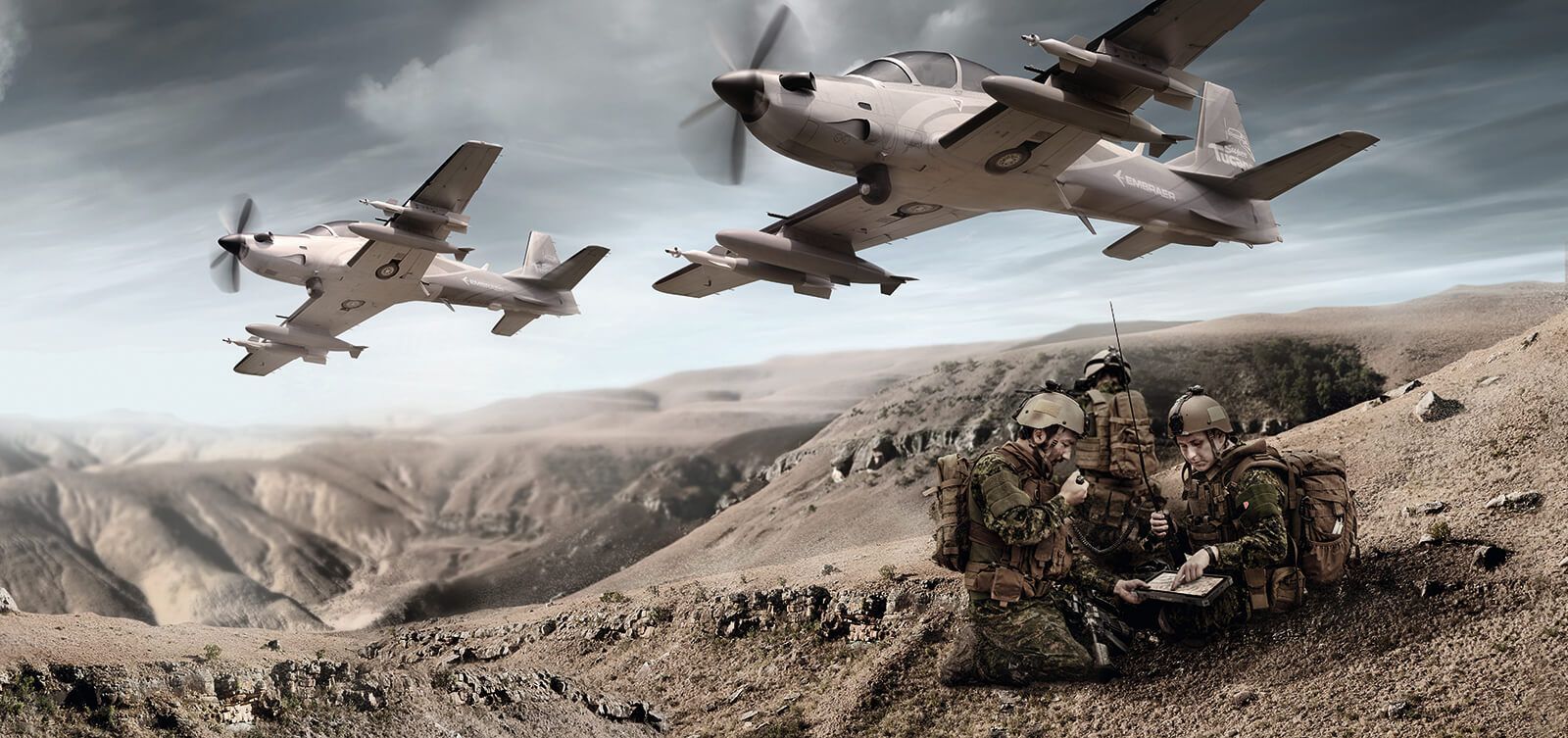
Close Air Support is where the A-29 family has proven itself in combat - thousands of hours over real battlefields, coordinating with ground forces to find, fix, and finish the target. The A-29N brings that same DNA, now flying under NATO standards. | Credit: Embraer Official Website
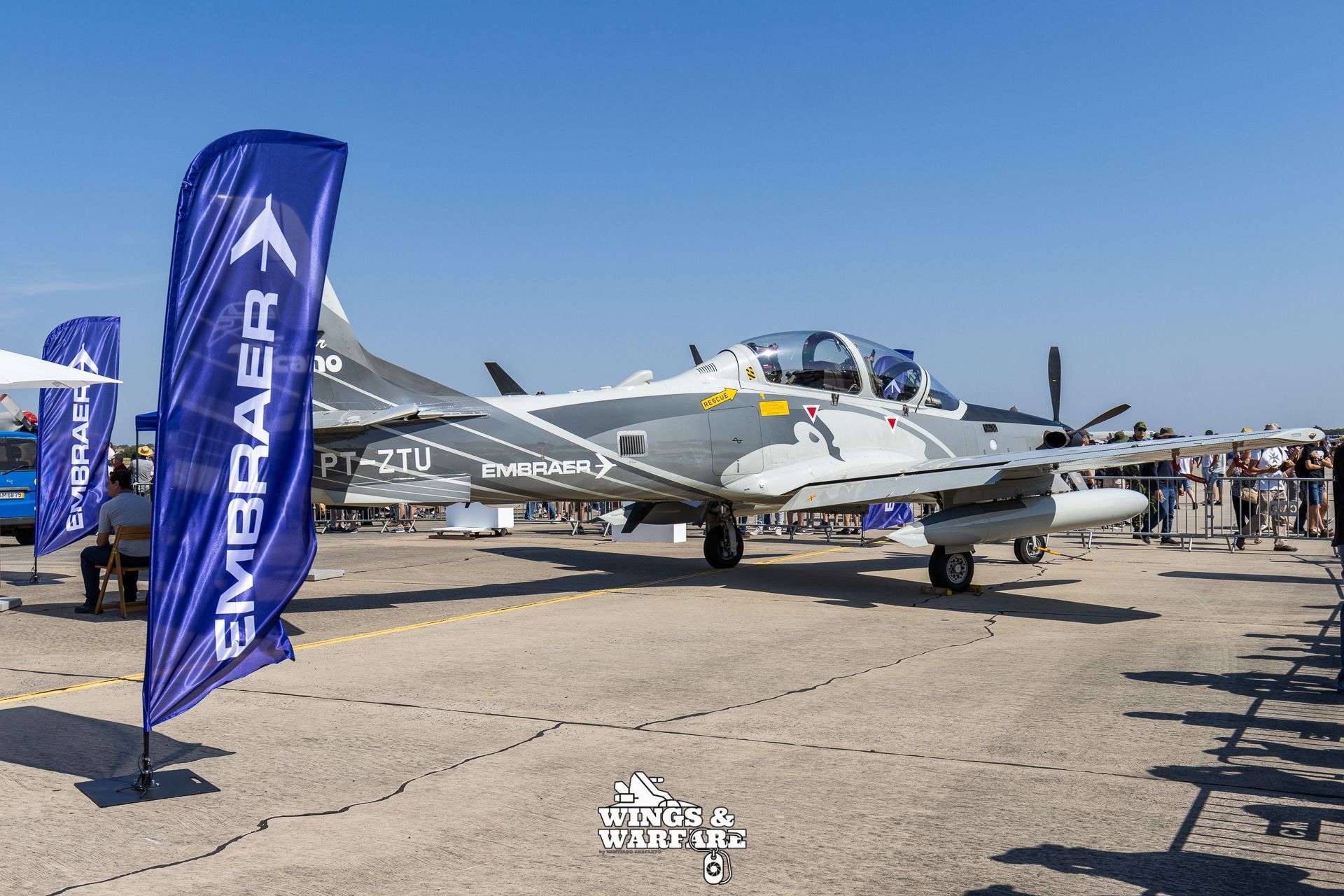
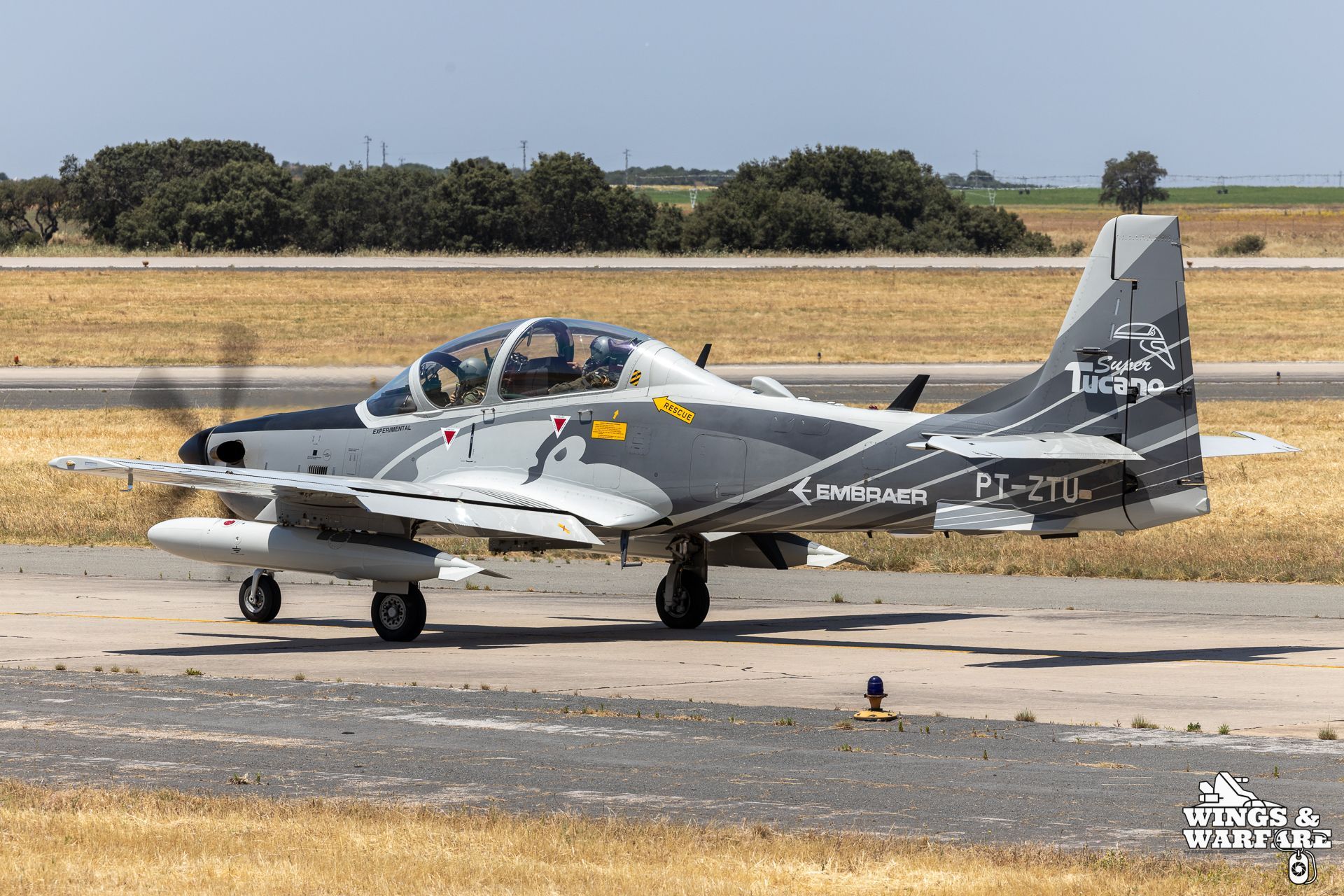
PT-ZTU on static display and taxiing at Beja Air Show 2024 - up close, the aircraft that would soon change Portugal's place on the NATO map. | Credit: Wings & Warfare
________________________________________________________________________________________________________________________________________
Based on the Embraer A-29 Super Tucano official brochure (March 2025) and open-source operational references.