F-35 or Gripen? The choice that will define Portuguese air defence for the next four decades
Saab recently acknowledged that OGMA has the potential to produce parts of the Gripen in Portugal. The news went largely unnoticed, but it got me thinking more systematically about a decision that will commit Portugal's defence budget for the next four decades.
For years this debate has been reduced to a slogan contest: the F-35 as a symbol of modernity and transatlantic alignment, the Gripen as the European and economically sensible option. What's almost always missing are the numbers, the real operational context, and an honest reading of what modern warfare is teaching us. This article tries to address that.
A preliminary note: the cost study I use as my main reference was produced by Aviation Week Network on behalf of Saab. The data comes from open sources within the US Department of Defense, which gives it credibility, but the commissioning context should be kept in mind. I say this not to discredit the numbers, but because intellectual honesty seems to me the foundation of any serious argument.
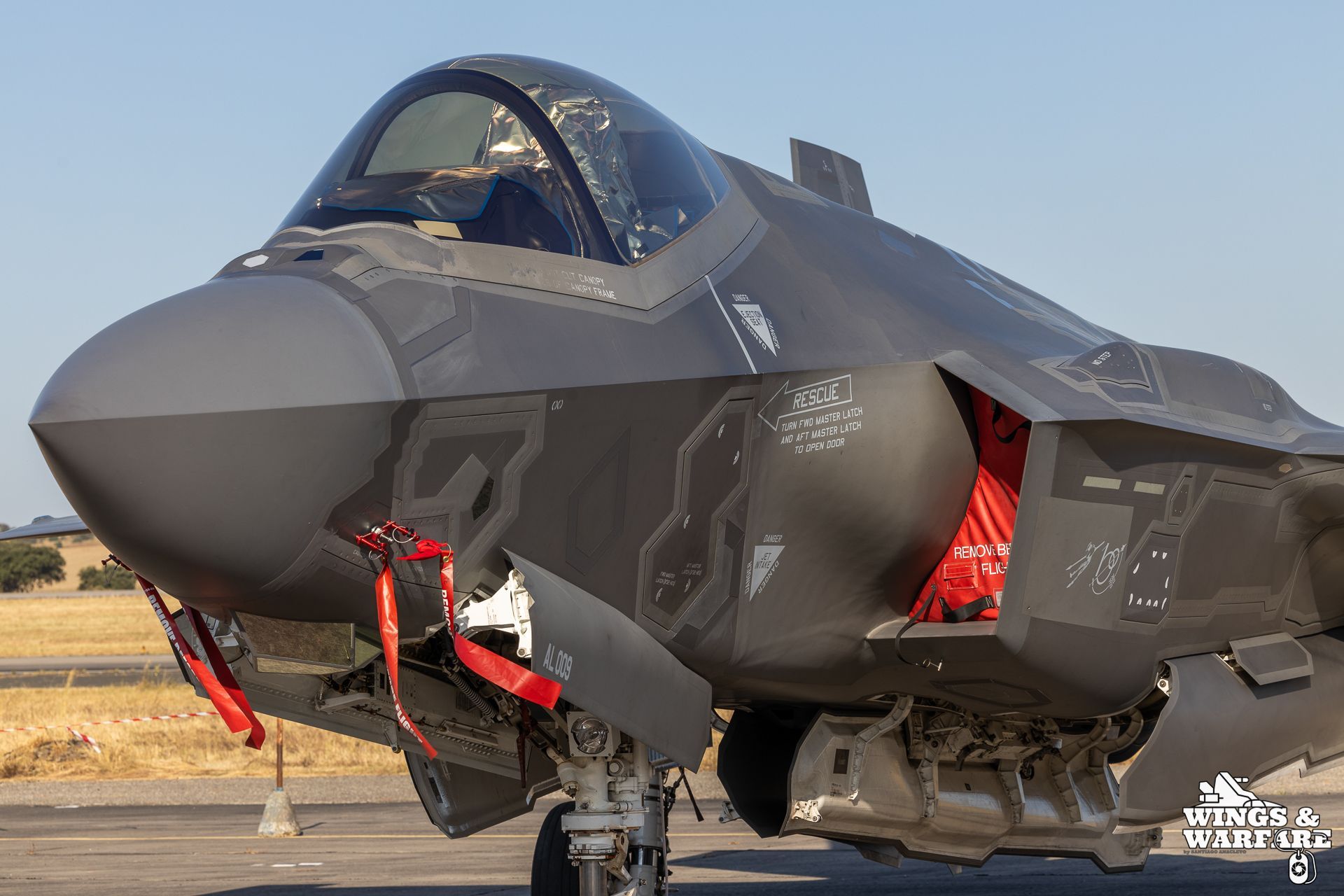
The technological fetish and the economic reality
Let's be honest: the idea of Portugal having the F-35 is a kind of technological fetish for some people, but it doesn't strike me as a sound investment strategy, either in the short or the long term.
We're talking about a fighter with an astronomical unit cost for our economy. And it's not just the acquisition: there's the need to purchase spare parts, proprietary equipment and tools, strictly certified by Lockheed Martin, for maintenance. Not to mention the deep infrastructure overhaul required to house this fleet. None of this is cheap, and none of it makes the headlines when people talk about the price of the aircraft.
What rarely enters this debate is the concept of Through Life Cost: the total cost of ownership over the entire useful life of the aircraft. Acquisition is just the down payment. The real cost includes decades of maintenance, operations, personnel, spare parts and technical support. According to US Department of Defense analysis, more than 60% of the total costs of a military fixed-wing aircraft are incurred during the operations and maintenance phase. Acquisition, the number that gets all the publicity, represents only around 28%.
This has a direct implication: buying cheap can end up expensive, but buying expensive guarantees decades of severe budgetary pressure. For Portugal, with a structurally constrained defence budget, this calculation is not academic. It is existential.
The numbers: what the study reveals
The Aviation Week study compares eight aircraft currently in production and active in global markets, using a theoretical fleet of 100 aircraft, a service life of 37 years and an average utilisation of 200 flight hours per aircraft per year. The scale is not Portugal's, but the ratios are directly comparable.
Cost comparison: F-35A vs. Gripen E/F vs. F-16V
| Indicator | F-35A | Gripen E/F | F-16V |
|---|---|---|---|
| Unit acquisition cost | $110.2M | $75.6M | $75.5M |
| Maintenance (per flight hour) | $29,283 | $12,200 | $13,048 |
| Operations (per flight hour) | $16,999 | $9,975 | $12,634 |
| Total cost per flight hour | $46,282 | $22,174 | $25,682 |
| Through Life Cost per aircraft | $453M | $240M | $265M |
| Total fleet TLC (100 aircraft) | $38.6bn | $21.2bn | $22.9bn |
Source: Aviation Week Network / SAAB, Fighter Aircraft Through Life Costs, May 2023. O&M data from US DoD AFTOC and VAMOSC systems.
The numbers are clear. The F-35A costs $29,283 per flight hour in maintenance alone. The Gripen E/F costs $12,200: less than half. In total cost of ownership per aircraft over 37 years, the F-35 comes in at $453 million. The Gripen E/F at $240 million.
For a fleet of realistic size for Portugal, between 20 and 30 aircraft, the difference accumulates into billions of euros over the programme's lifetime. These are billions locked into aircraft maintenance, or that could be invested in Portugal's real defence gaps: air defence systems, ammunition stocks, electronic warfare, cyber defence.
- In a fleet of 24 aircraft flying 200 hours annually each, the maintenance cost difference between the F-35 and the Gripen E/F amounts to roughly $82 million per year. Over 37 years, that is approximately $3 billion spent exclusively on additional maintenance.
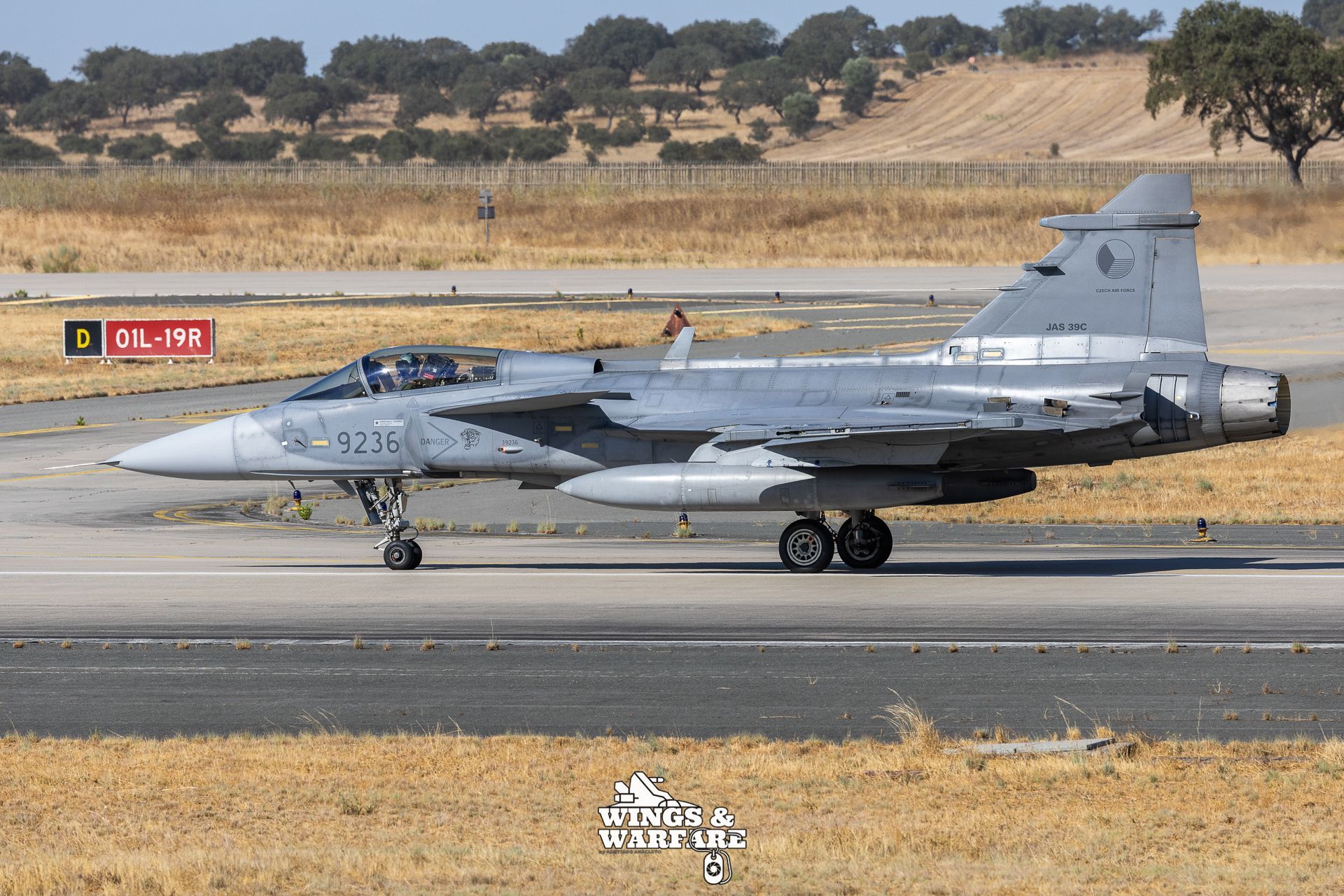
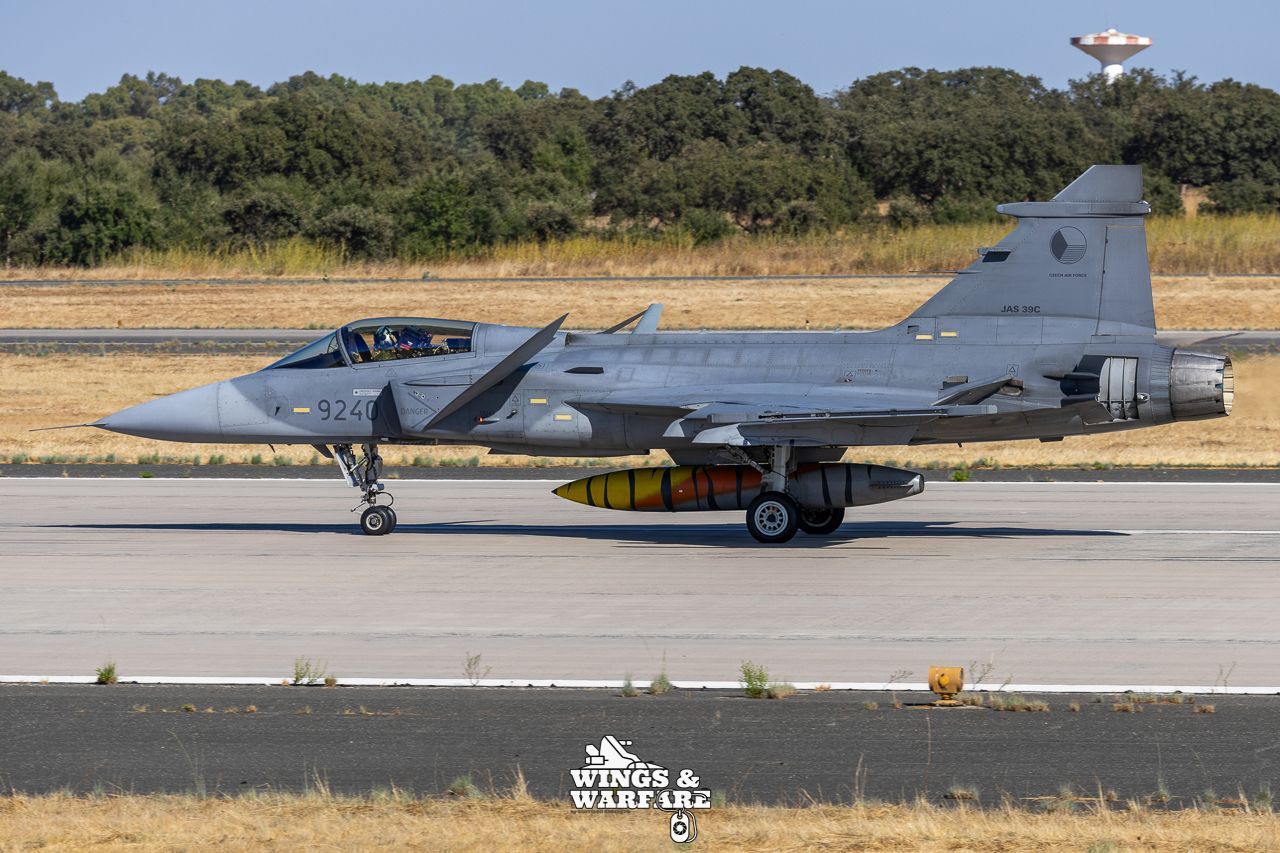
Saab JAS 39C Gripen 9236 of the 211. Taktická Letka (211th Tactical Squadron), Czech Air Force, taxiing at Air Base No. 11 in Beja during NATO Tiger Meet 2025. © Wings & Warfare
The new threat: drones and ground vulnerability
Beyond costs, we need to look at the reality of current conflicts. What we have seen in Ukraine and the Middle East is not a technological curiosity. It is a structural shift in how war is waged, and it forces a rethink of any combat aircraft acquisition decision.
Let's imagine a concrete scenario: ten years from now, a nation decides to attack Portugal. If we had chosen the F-35, we would be operating a fleet of 10 to 20 aircraft at most, concentrated on a single base. The attacker would not need a sophisticated operation. They would deploy a drone swarm to neutralise our air defences. With an arsenal whose total cost would be less than that of a single F-35, they would rapidly destroy the runway, taxiway and hangars. Our air defence would be out of action before a single fighter took off.
This is not hypothetical. In June 2025, Ukraine executed Operation Spider Web: 117 FPV drones, concealed inside trucks within Russian territory, simultaneously struck five Russian air bases and destroyed or damaged more than 40 strategic bombers, including Tu-95s and Tu-22s, as well as A-50 surveillance aircraft. The estimated material damage was $7 billion. The drones cost a fraction of that.
- The Russian bombers destroyed in Operation Spider Web represented approximately 34% of Russia's strategic cruise missile carriers. They were neutralised by drones the size of a medium pizza box, piloted remotely from Ukraine and guided by autonomous vision systems trained on images of the targets.
The lesson is not new to those who follow these conflicts closely, but the scale and precision of this operation confirm something Western military planners are still fully absorbing: the concentration of high-value air assets on fixed bases is a critical vulnerability in modern warfare. The strategic response, as Sweden recognised decades ago when designing the Gripen doctrine, is dispersal.
The value of what is defended and the inventory ratio
There is an aggravating factor that makes this scenario even more concerning for Portugal: the deep gaps in our air defence capabilities. There is talk of acquiring medium-range systems for the Air Force and short-range systems for the Army, but we are far from having adequate coverage or, more importantly, ammunition stocks capable of sustaining a real conflict.
It is obvious that, when we question the use of a $2 million missile to shoot down a $20,000 drone, the maths seems wrong at first glance. But the real calculation should not be made on the price of the drone: it should be made on the value of what is being defended. The cost of letting that drone strike a power station, a hospital, a communications centre, military infrastructure or our own population will always be infinitely greater than the cost of the missile fired.
The problem for Portugal is not the cost of the shot itself: it is the sustainability of the inventory ratio. For every missile we have in stock, an adversary can put ten drones in the air. If we exhaust our inventory in 48 hours, our critical infrastructure is defenceless.
This is not speculation. Two recent conflicts demonstrate it with surgical precision. In the Twelve-Day War of June 2025, the US fired more than 150 THAAD interceptors and around 80 SM-3s in support of Israel, consuming approximately one quarter of the entire American THAAD stockpile in under two weeks. The consumption rate exceeded by 50% the highest annual production rate ever recorded. In other words: the US burned through years of production in days.
Nine months later, in February 2026, Israel and the US launched new strikes against Iran. Israel entered this second conflict already depleted from the previous war. In the first five days, the US spent around $2.4 billion on Patriot interceptors. Israel formally communicated to the US that it was critically low on ballistic missile interceptors. A single Patriot PAC-3 MSE interceptor costs around $4 million. The Iranian Shahed drone that forced it to be fired costs $50,000.
- In the Twelve-Day War of June 2025, the US consumed roughly one quarter of its entire THAAD interceptor stockpile in under two weeks, at a rate 50% above the highest annual production ever achieved. In the 2026 conflict, Israel entered already depleted and was critically low again within days. The mathematics of inventory sustainability is the central problem of modern air defence.
And here we return to the core economic argument: every extra euro spent on the F-35's life cycle is a euro that does not go towards ammunition, air defence systems or defence redundancy. A Gripen fleet frees up budgetary space to build the layers of defence that Portugal genuinely needs.
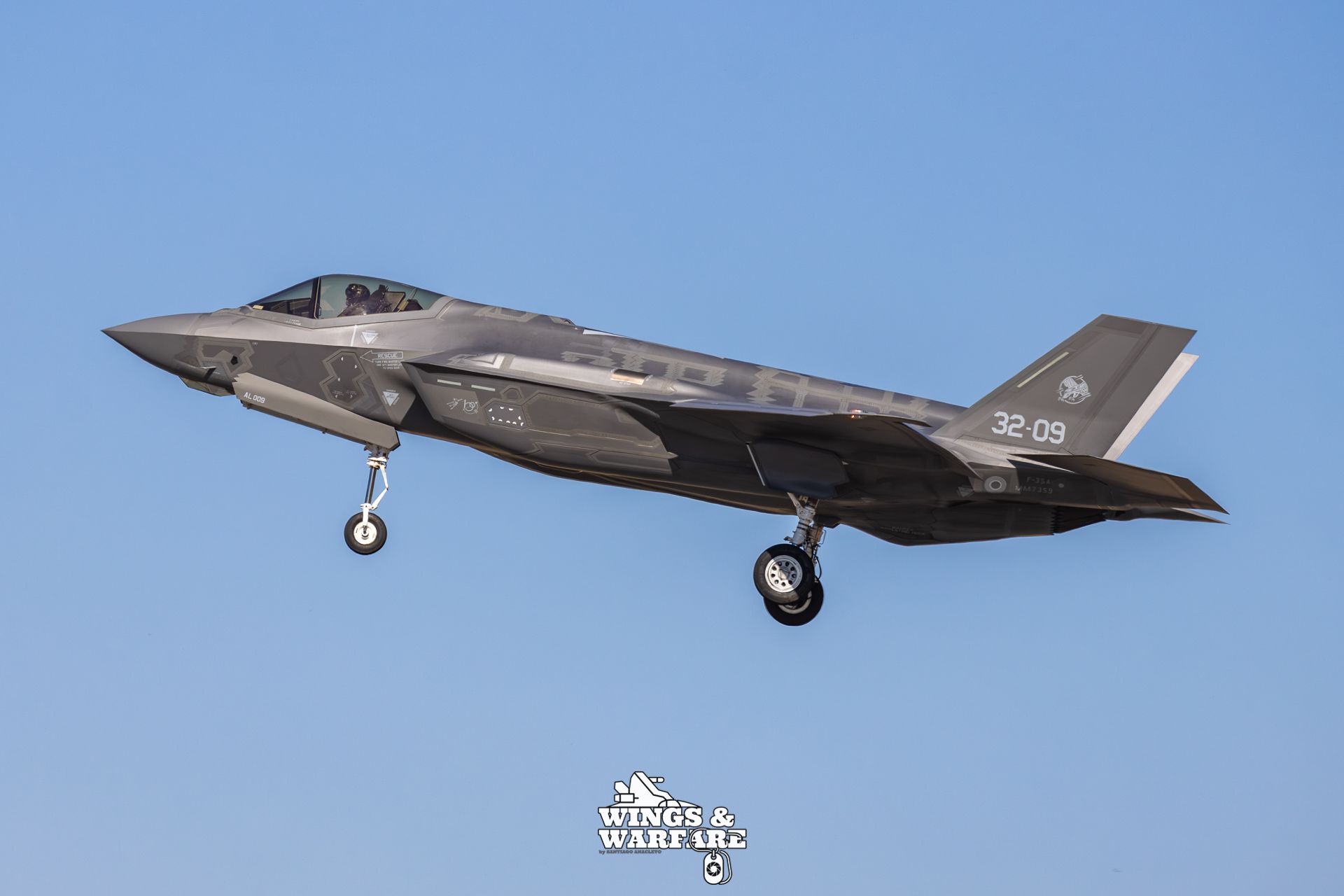
Lockheed Martin F-35A Lightning II 32-09 of the Italian Aeronautica Militare on final approach into Beja during the Beja Air Show 2024. © Wings & Warfare
The onion metaphor: layered combat and Portugal's role
There is another vital factor this debate rarely includes: Portugal is part of an Alliance. Unless the attacker were an ally, we could always count on external support. And that completely changes the logic of the aircraft choice.
Modern air combat is like an onion, made of layers. To understand why this matters for our decision, it is worth looking at what the Americans themselves are doing. Someone decided to take a vertically launched surface-to-air missile from frigates, the SM-6, adapt it for air launch under the designation AIM-174, and mount it under the F/A-18 Super Hornet.
The advantage is considerable. We are talking about a missile with an intercept capability beyond 200 miles, while the AIM-120D tops out at around 100. In practice, this means that on the front line there can be a stealth fighter, an F-35 or F-22, an AWACS system such as the E-2 or E-3, or even a Wingman drone identifying and tagging a target, while the F/A-18, armed with the AIM-174, kills it from the rear, well outside the adversary's response envelope. This combination of 4th and 5th generation fighters operating in a networked architecture, with very long-range missiles, enables tactics that were impossible a decade ago.
How does this relate to our choice? Directly. Many of our allies already operate the F-35. The UK, the Netherlands, Norway, Denmark and Belgium operate or will operate the aircraft. These countries cover the stealth layer of the NATO architecture. Portugal does not need to duplicate that capability. It can contribute more effectively with a versatile, interoperable and economically sustainable platform, capable of integrating close air support, maritime patrol and medium-range air defence missions in coordination with allies covering the more advanced layers.
The aircraft choice should be made on the basis of NATO interoperability and the role Portugal can play in that architecture, not out of prestige or because the neighbour has the latest model. The Gripen E/F is compatible with NATO communication and datalink standards. Interoperability is a technical question with technical solutions.
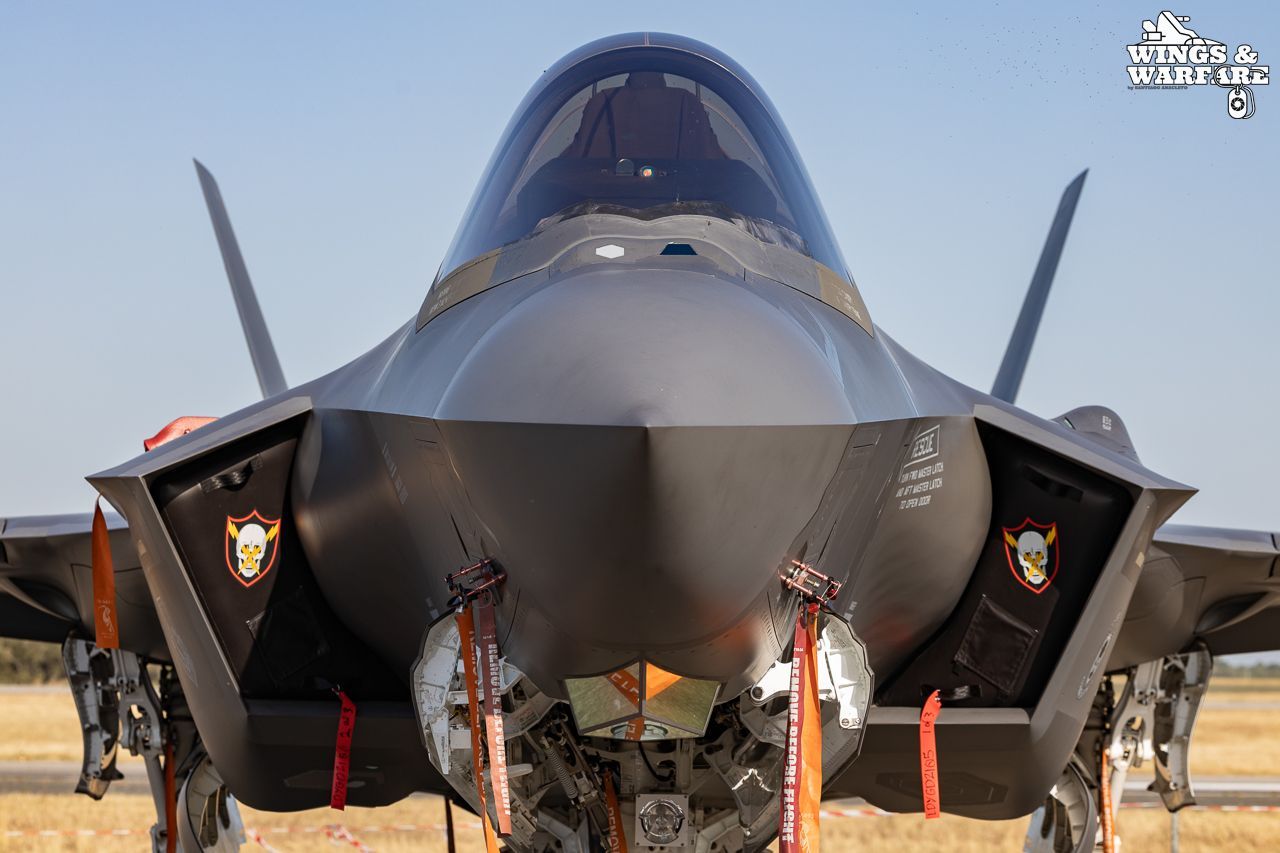
Lockheed Martin F-35A Lightning II of the United States Air Force on static display at the Beja Air Show 2024. © Wings & Warfare
Operational dispersal and technological sovereignty
The Gripen was designed from the outset to operate from road strips of just 800 metres, with minimal maintenance crews and rapid turnaround cycles. This doctrine was developed by Sweden over decades of territorial defence planning. It is directly relevant to any high-intensity conflict scenario: a fleet concentrated at Montijo or Monte Real is a target; a fleet dispersed across multiple temporary operating locations is a far more complex logistical problem for any adversary.
There is also the question of technological sovereignty. With the Gripen, Portugal would have access to the source code and the ability to modify the aircraft without depending on the manufacturer for every update. With the F-35, it is Lockheed Martin that decides what can and cannot be done to the aircraft, and every change involves negotiation with the company and with the US government. Saab's VP of Gripen Business mentioned, during a recent visit to Stockholm, that the company's engineers code in the morning and fly in the afternoon. This is not sales rhetoric: it is a system architecture deliberately designed for rapid adaptability, and in a threat environment evolving as fast as the current one, that is not a minor detail.
The possibility of production at OGMA strengthens this argument. Saab cited the Brazilian model, where Embraer participated in producing the Gripen E. OGMA, which Embraer controls, has the installed technical capacity for a similar partnership. With the F-35, Portugal's negotiating room would be structurally far more limited.
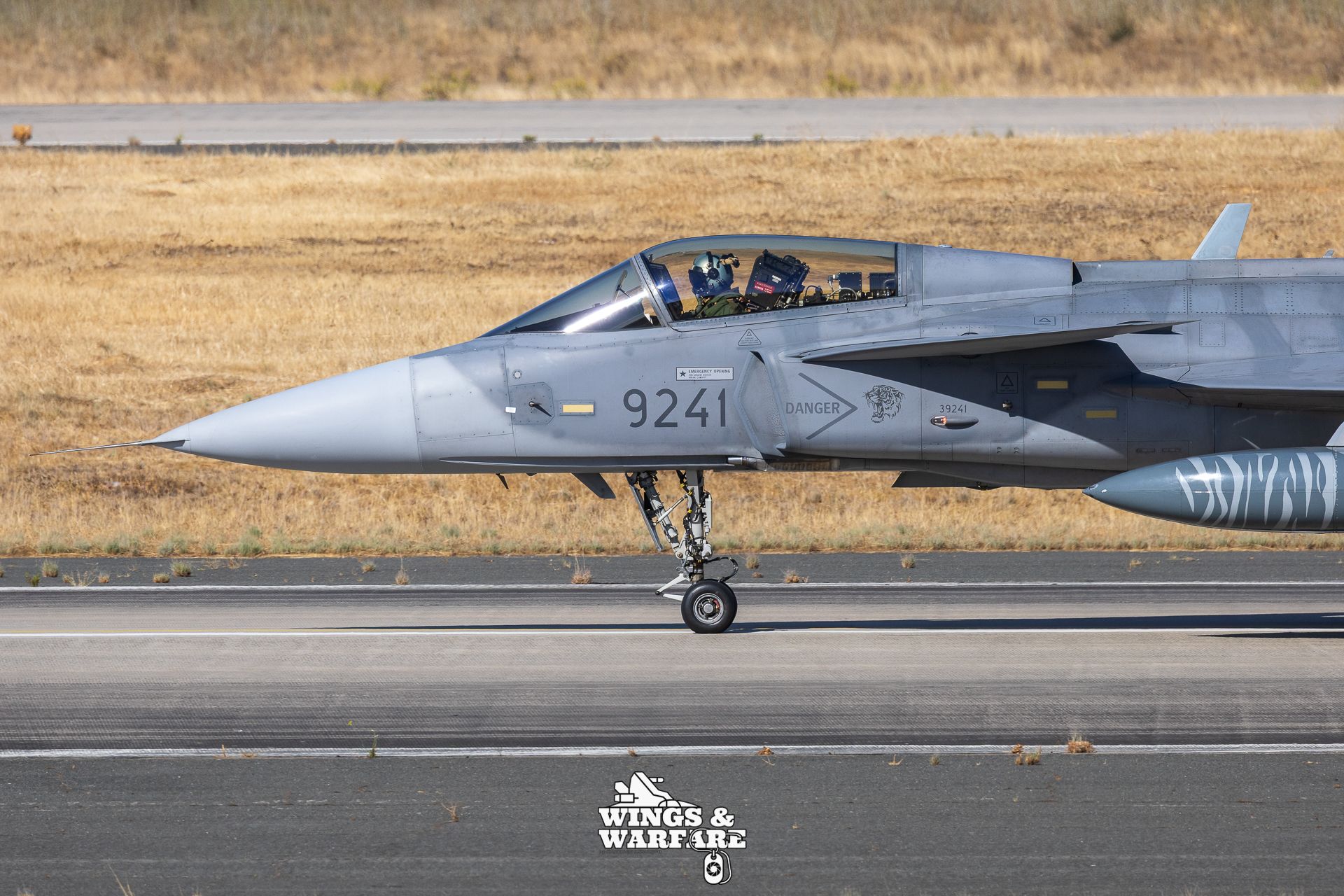
Saab JAS 39C Gripen 9241 of the 211. Taktická Letka, Czech Air Force, rolling on the runway at Air Base Nº11 in Beja during NATO Tiger Meet 2025. The tiger stripe markings on the wing tank and the squadron's tiger badge on the fuselage are clearly visible. © Wings & Warfare
The limitations of this argument
It would be dishonest not to acknowledge where the argument for the Gripen has its weak points.
The F-35 has stealth capabilities the Gripen genuinely does not possess. In high-density contested airspace penetration scenarios, this difference is real and significant. If Portugal had ambitions to project power into anti-access and area-denial environments, the F-35 would be the appropriate platform. The central question is whether that mission is relevant to our actual defence strategy.
There is also political pressure that cannot be ignored. The US has exerted direct influence over allied countries to choose the F-35, and that dimension carries real weight in bilateral relations and NATO positioning. The final decision will not be purely technical or economic.
And the Aviation Week study, although based on official US data, was commissioned by Saab. That does not invalidate the numbers, but the selection of variables and the structure of the analysis naturally favours the product that commissioned it. Caution in interpretation is mandatory.
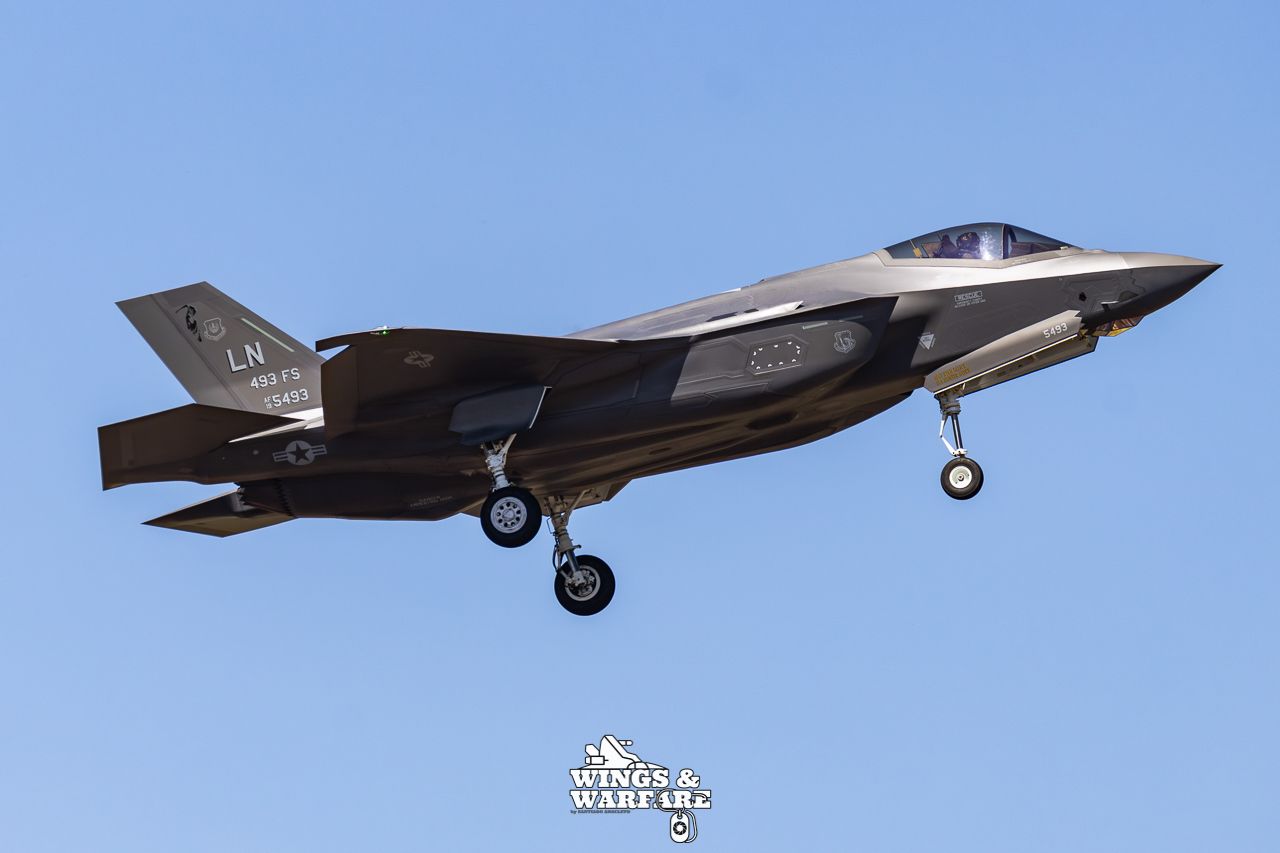
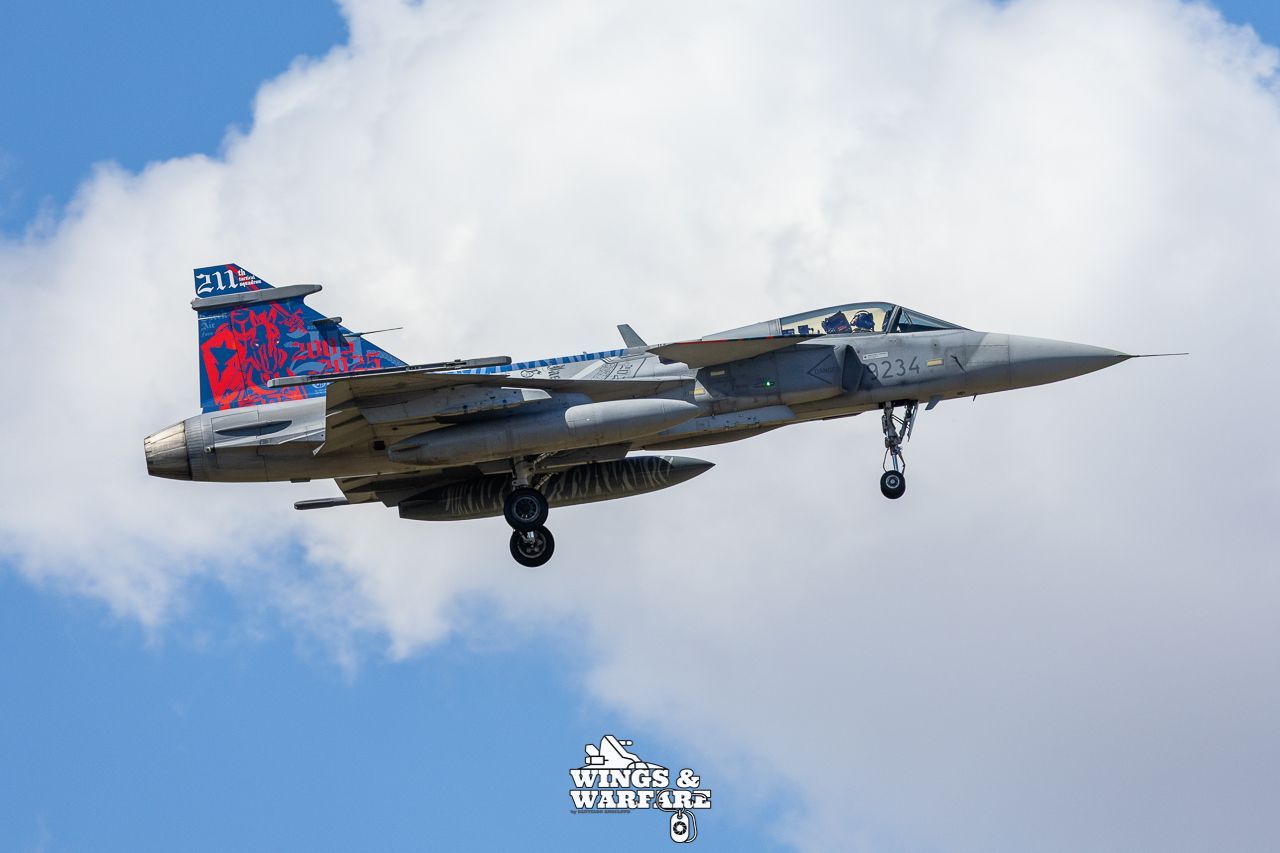
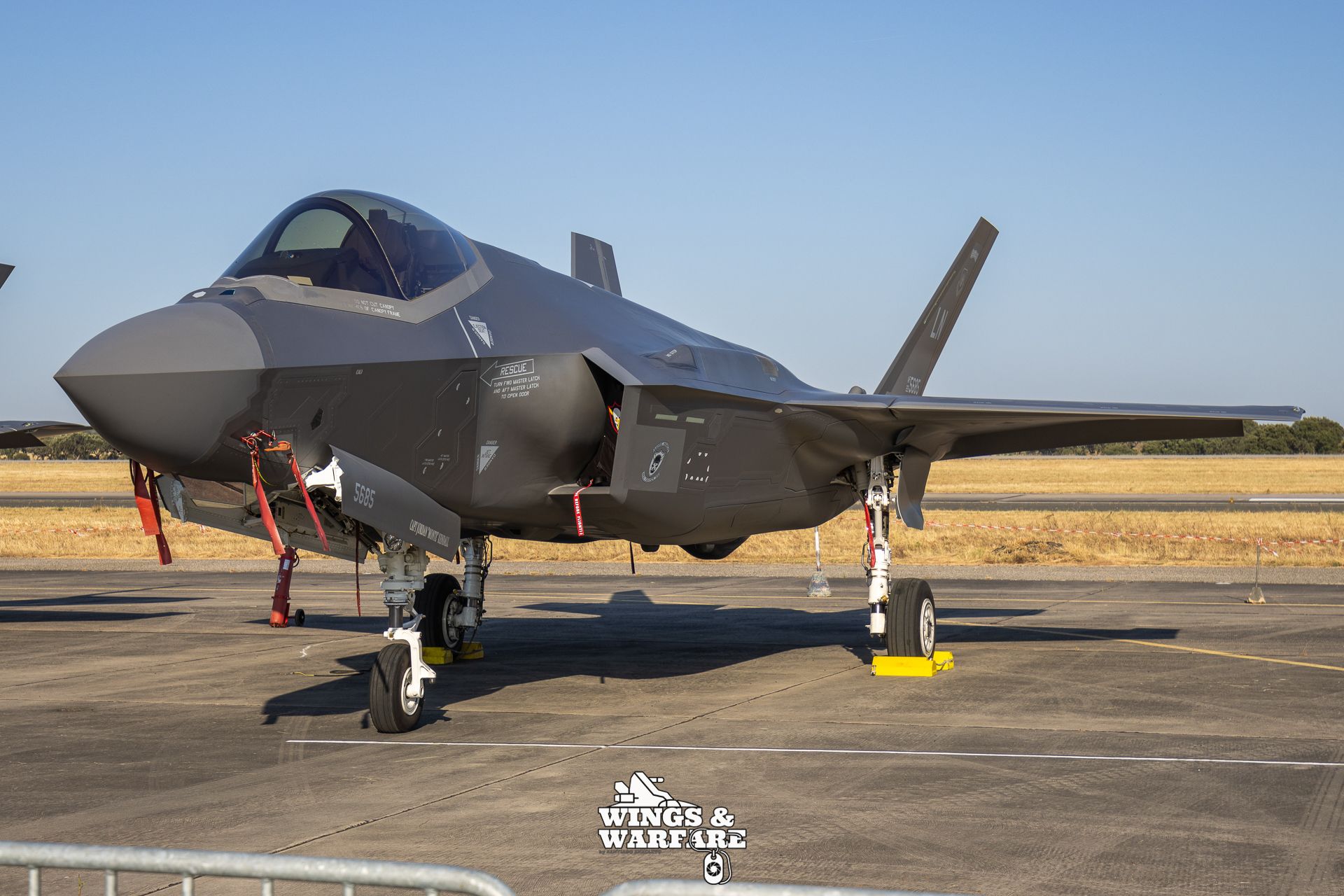
Two exceptional aircraft, two very different realities. Both the F-35 and the Gripen represent the pinnacle of Western combat aviation, and photographing them side by side puts the debate in sharp relief. The F-35 is, without question, the most capable fighter in the sky today. But capability and affordability are two different conversations, and for a country like Portugal, that second conversation cannot be avoided. The numbers don't lie: they just rarely make the headlines. © Wings & Warfare
Conclusion: the choice that reveals our strategy
The choice between the F-35 and the Gripen is not just an acquisition decision. It is a statement about what role Portugal intends to play in NATO, what risks it considers a priority, and how it plans to balance military capability with long-term financial sustainability.
It seems to me that the rational answer, for a country with Portugal's strategic and budgetary profile, points clearly towards the Gripen E/F. Not because the F-35 is a bad aircraft: it is probably the best combat aircraft in the world right now. But the best aircraft in the world, operated in a minimal fleet, concentrated on a base vulnerable to low-cost drone swarms, with maintenance costs consuming the defence budget for decades, does not produce the best defence for Portugal.
The Gripen allows for a larger fleet, with better operational dispersal, far more controlled life-cycle costs and the capacity for autonomous technological adaptation. It frees up budget to build the layers of defence that modern warfare is showing to be decisive: layered air defence systems, sustainable ammunition stocks, drone intercept capabilities, electronic warfare.
The final decision will be made by people with access to information I do not have, in political contexts that transcend technical analysis. But the numbers are available, and they deserve to be at the centre of the public debate, before the narrative of technological prestige replaces strategic reasoning.
But what do I know about any of this? I'm just a visual storyteller who likes to photograph aircraft and tanks.
____________________________________________________________________________________________________
Sources: Aviation Week Network / SAAB, Fighter Aircraft Through Life Costs (May 2023); U.S. DoD AFTOC and VAMOSC systems; Atlantic Council, June 2025; CSIS, February 2026; Kyiv Post, March 2026; Defence Industry Europe, March 2026; ECO, interview with Daniel Boestad, VP Gripen Business, Saab.